The Philadelphia Phillies didn’t dominate their opening homestand — but they may have revealed something more important.
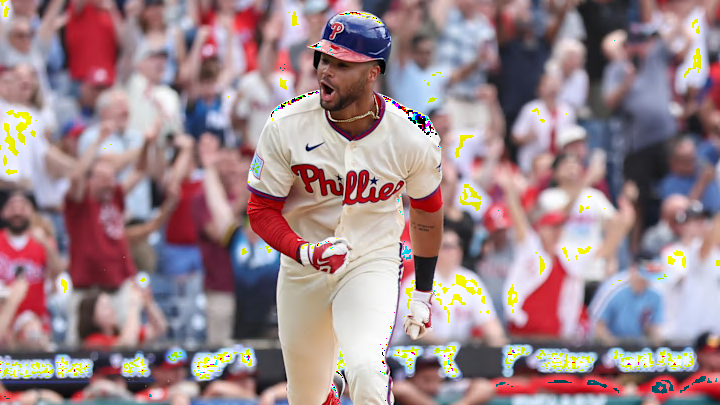
Justin Crawford went 7-for-17 (.412) in his first week in the majors. | Bill Streicher-Imagn Image
A 3-3 record doesn’t jump off the page. It reflects inconsistency, missed opportunities, and a team still searching for rhythm. But underneath that uneven start, there were clear signs that this roster might be built to sustain success over the long haul.
And those signs started with youth.
Justin Crawford wasted no time showing he belongs in the majors. The rookie center fielder hit .412 during the homestand, displaying a skill set that feels tailor-made for today’s game — contact, speed, and situational awareness.
He wasn’t just collecting hits. He was impacting moments.

Whether it was breaking up a no-hit bid with a well-placed dribbler or delivering a walk-off single in extra innings, Crawford consistently found ways to contribute. His ability to put the ball in play under pressure stands out, especially in an era dominated by strikeouts.
There’s also a sense that this is just the beginning.
Pairing Crawford with Trea Turner at the top of the lineup could eventually create constant pressure on opposing defenses. That dynamic hasn’t fully materialized yet, but the potential is obvious.
Then there’s Andrew Painter.
The highly anticipated pitching prospect didn’t just make his debut — he validated the hype. Painter showcased a complete arsenal, featuring multiple pitches he could command with confidence. It’s rare for a 22-year-old to arrive with that level of polish.
Velocity wasn’t an issue, either. His fastball reached the upper-90s, and his secondary pitches complemented it effectively. More importantly, he pitched with composure — the kind that suggests he’s ready for more than just a temporary role.
Of course, one start doesn’t define a season.
But it’s a strong foundation.
Cristopher Sánchez offered another encouraging sign from the rotation. In his first two outings, he showed two different versions of effectiveness — one dominant, one more of a grind — yet both resulted in productive performances.
That adaptability is what separates good pitchers from great ones.
Even when his command wavered, Sánchez found a way to limit damage. Early in the season, that kind of resilience matters.
At the back end of the bullpen, Jhoan Duran is already proving why he was brought in.

While not flawless, his impact has been undeniable. He’s closed out tight games, navigated high-pressure situations, and delivered when the Phillies needed stability most. For a team built around pitching, having a reliable closer changes everything late in games.
And then there’s the outfield.
Adolis García and Brandon Marsh have quietly given the Phillies something they lacked last year — balance. García’s defensive range has already prevented runs, while his power adds another dimension to the lineup.
Marsh, meanwhile, has been steady and efficient at the plate, consistently putting together quality at-bats and getting on base.
Together, they represent both improvement and potential.
For Philadelphia, the equation is simple. If players like Marsh — along with others in the lineup — can sustain this level of production over a full season, the offense becomes far more dangerous.
That’s the real takeaway from this opening stretch.

The record may not reflect it yet, but the building blocks are there — emerging talent, rotational depth, late-inning reliability, and improved defense.
The Phillies aren’t a finished product.
But they may already be closer than they look.
Leave a Reply