
A federal appeals court’s decision to allow the Pentagon’s restrictions on military service by transgender personnel to remain in effect has garnered a response from Defense Secretary Pete Hegseth, who publicly touted the ruling as a validation of the administration’s approach to military readiness.
In a post on X, Hegseth wrote, “American Greatness. Military Lethality. Common Sense. And THE LAW.” He added that the decision amounted to a “major legal victory” for the Defense Department and argued that maintaining high and uniform medical and readiness standards “ensures a lethal, cohesive, deployable U.S. Military—free of ideological agendas.”
Newsweek contacted the Department of Justice and the Department of Defense for comment via email outside of normal office hours on Wednesday.
Why It Matters
The appeals court’s decision to allow the ban while litigation continues has immediate and far-reaching implications, affecting not only the status of thousands of active-duty personnel but also offering insight into how courts may treat future challenges to transgender-related policies.

The ruling underscores a judiciary increasingly willing to defer to military judgment, even as critics have warned that the policy could dismantle longstanding careers and have contested the need for such a ban.
As the case moves forward, the stay allows the administration to continue to reshape military standards amid a national debate over readiness, inclusion and the limits of executive power.
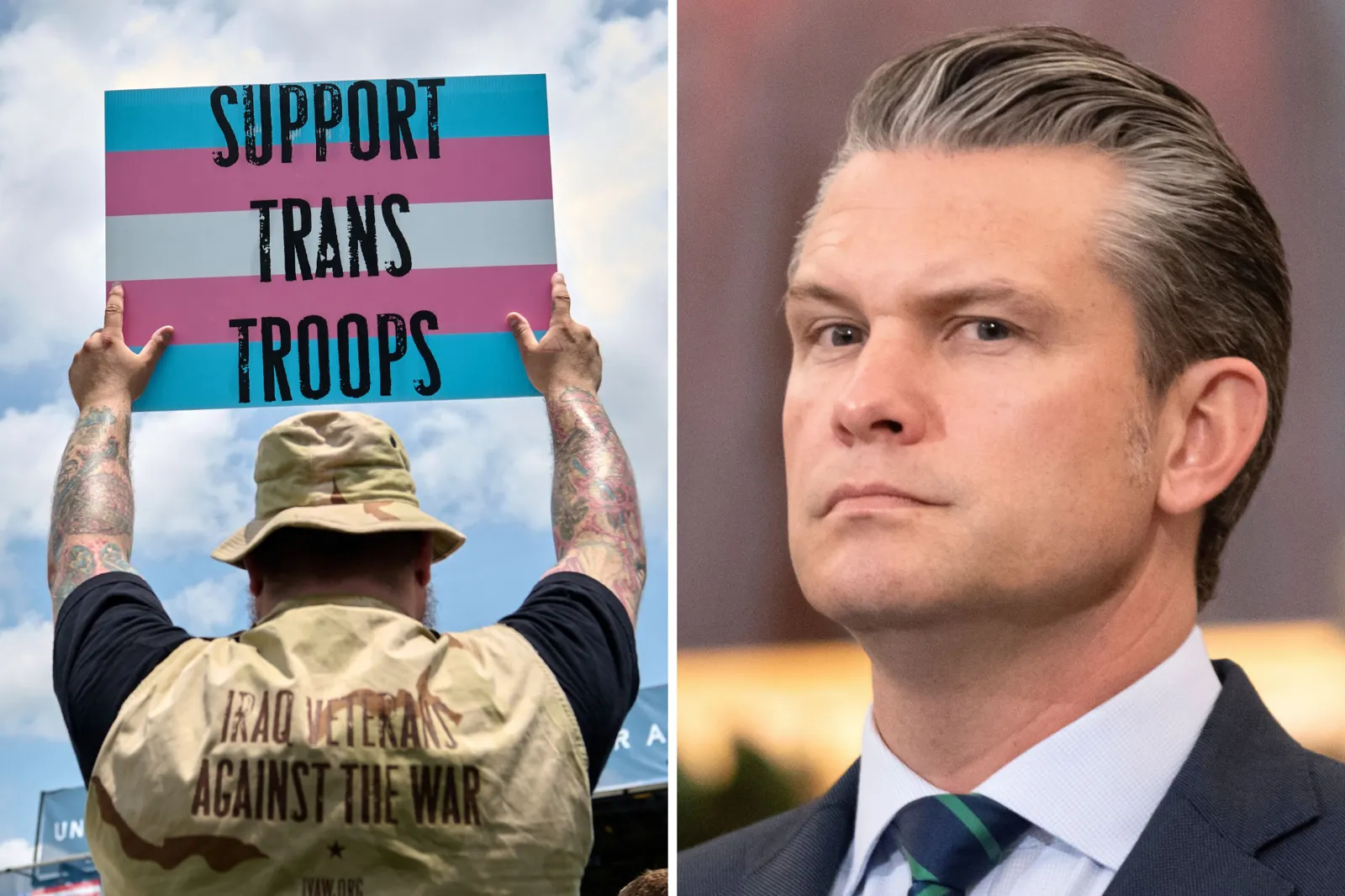
A person holds a sign supporting transgender veterans at the Unite For Veterans rally on the National Mall in Washington, D.C., on June 3, 2025. Defen… | Dominic Gwinn/Middle East Images/AFP /Mark Schiefelbein/AP/Getty Images
What To Know
The Court Ruling and Legal Reasoning
The U.S. Court of Appeals for the D.C. Circuit on Tuesday granted the government’s request for a stay pending appeal, allowing the enforcement of the transgender ban while litigation continues.
The order dissolved a prior administrative stay and replaced it with the new stay, with one judge dissenting.
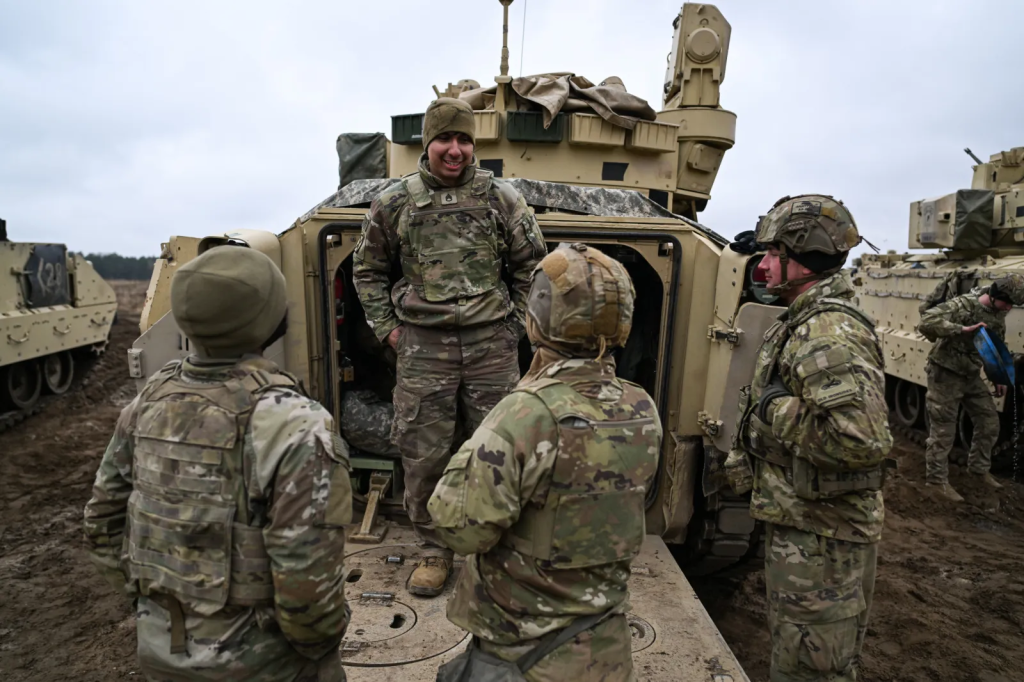
The majority opinion, written by Judges Gregory Katsas and Neomi Rao, concluded that the Defense Department was likely to prevail on the merits.
The judges said the district court had not given “sufficient deference” to military judgment when blocking the policy. They wrote that the policy “likely does not violate equal protection” and that recent Supreme Court precedent indicates classifications based on gender dysphoria do not trigger heightened constitutional scrutiny.
The panel further emphasized the Pentagon’s reliance on studies suggesting elevated nondeployability rates for individuals with gender dysphoria and higher associated mental-health risks.
Evidence Cited To Support the Policy
Those materials included a 2021 Defense Department study—The “AMSARA Study” mentioned in the order—that indicated that up to 40 percent of individuals with a gender dysphoria diagnosis could become nondeployable within two years and a 2025 literature review that concluded that transgender individuals are significantly more likely to receive psychiatric diagnoses and attempt suicide.
A 2022 systematic review of mental-health outcomes among transgender veterans and active-duty personnel highlighted a number of issues in the policy fight.
The review found consistently worse outcomes than among cisgender service members, including higher rates of depression, anxiety, PTSD, suicidality, substance-use disorders and military sexual trauma.
The study reported a crude suicide rate of 82 per 100,000 person-years, while another found 57 percent had recent suicidal ideation.
Transgender personnel also faced sharply elevated risks of suicide-related events and sexual harassment, reflecting layered stigma and military-specific stressors.
Reactions and Ongoing Legal Fight
Hegseth’s policy—implemented at the direction of the administration’s January 2025 executive order—bars individuals with a diagnosis or history of gender dysphoria from military service, with limited waiver exceptions.
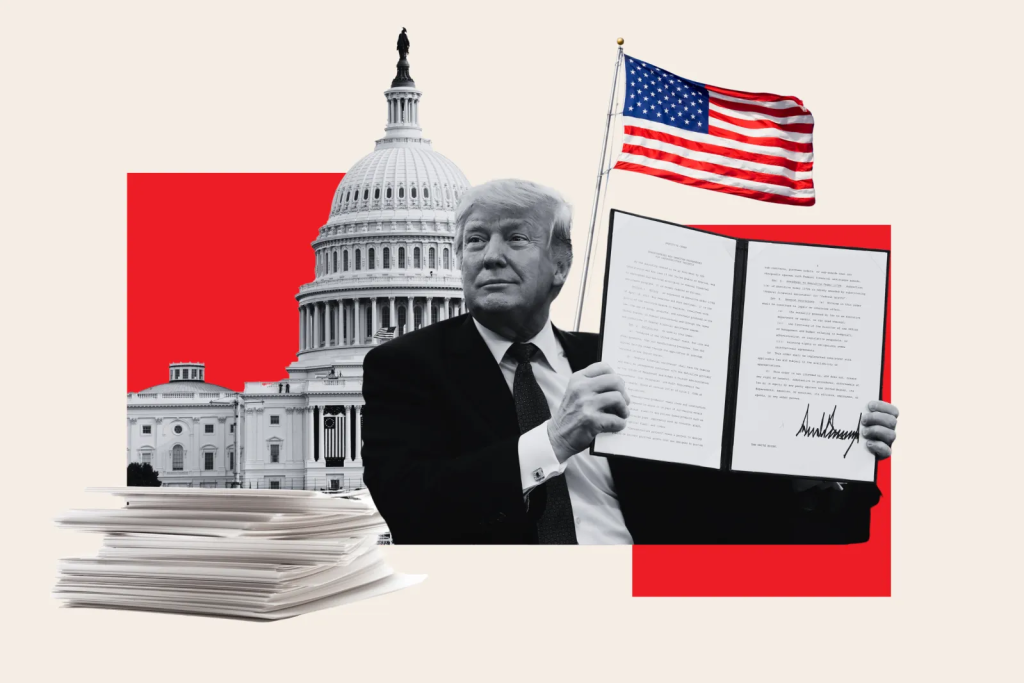
The order directed the Pentagon to align its medical standards with longstanding requirements that service members be free of conditions that may cause excessive time away from duty.
Critics of the policy, including the plaintiffs currently challenging it, argued that it constituted a categorical ban on transgender service rather than a medically grounded standard.

District Court Judge Ana Reyes previously found that challengers were likely to succeed on the merits, concluding that the policy appeared rooted in disapproval of transgender identity rather than military necessity.
Judge Cornelia Pillard issued a forceful dissent from Tuesday’s ruling.
She wrote that the policy rested on “denigration and vitriol” and lacked evidence-based justification, warning that the stay “makes it all but inevitable that thousands of qualified service members will lose careers they have built over decades.”
Pillard said the government had supplied “no evidence” showing that the exclusion of transgender service members was tied to military needs.
Hegseth, in his public comments, characterized the ruling as confirmation that the Pentagon had acted within the bounds of both military prudence and constitutional law.
For now, the stay reinstates the policy as litigation proceeds, leaving the employment status of affected service members dependent on the eventual outcome of the government’s appeal.
The underlying case, Talbott v. United States, will continue to move forward in the D.C. Circuit, with the court’s final decision likely to determine the future legal framework governing the service eligibility of transgender personnel.
What People Are Saying
Pete Hegseth mocked Judge Ana C. Reyes after she blocked the ban earlier this year: “Since ‘Judge’ Reyes is now a top military planner, she/they can report to Fort Benning at 0600 to instruct our Army Rangers on how to execute High Value Target Raids,” and in a speech declaring the Armed Forces were shedding what he called “wokeness,” said bluntly: “No more pronouns. No more climate change obsession. No more dudes in dresses – we’re done with that s**t.”

What Happens Next
With the appeals court allowing the transgender ban to move forward, the Pentagon can immediately resume enforcing the policy while the case proceeds through full appellate briefing and argument, a process that could take months and may ultimately reach the Supreme Court.
During this period, separation actions and updated medical standards will continue inside the military, while plaintiffs weigh new legal strategies and lawmakers consider potential oversight or legislative responses.
The stay does not resolve the case but sets the stage for a high-stakes ruling that will determine whether the policy becomes a durable part of U.S. military regulation or is struck down after further judicial review.
Leave a Reply