BRADENTON, Fla. — The Philadelphia Phillies feel confident about the top of their starting rotation heading into the 2026 season.
What remains far less certain is what lies behind it.
The team’s frontline starters provide stability, and the group will only strengthen when Zack Wheeler returns. But beyond that core, the Phillies lack proven organizational depth — a concern that becomes critical the moment injuries enter the picture.
Simply put, if one of Philadelphia’s starters goes down, there isn’t an obvious replacement waiting in the wings.
MLB Pipeline’s recently released Top 30 prospects list offered a glimpse into the situation. The Phillies’ farm system ranked 20th overall, and only three pitching prospects in that group have reached Double-A or higher.
One of them is Andrew Painter, the organization’s top pitching prospect.
The other two are Moisés Chace and Jean Cabrera.
Cabrera gaining attention this spring
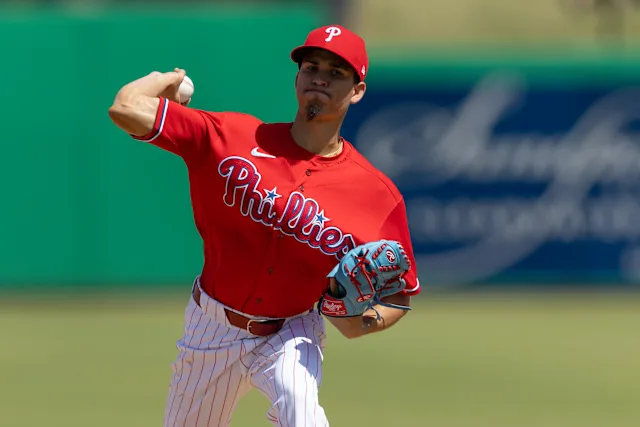
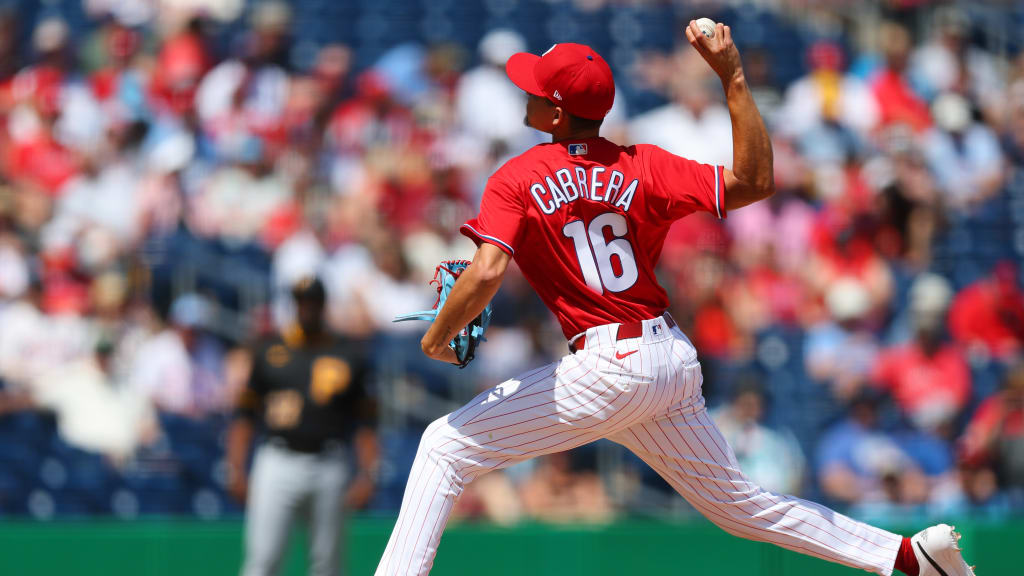
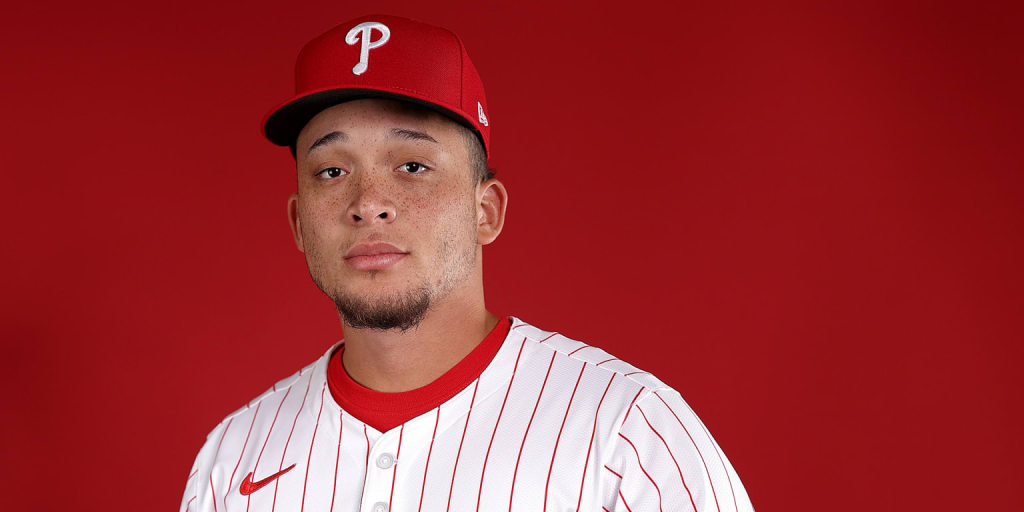
Cabrera, ranked No. 15 in the Phillies’ system, took the mound Friday against Pittsburgh at LECOM Park as the team continues evaluating potential depth options.
The Venezuelan right-hander threw 50 pitches over 2 1/3 innings, striking out three batters.
Cabrera isn’t known for overpowering hitters. His fastball typically sits in the low-to-mid 90s, relying more on pitch mix and command than sheer velocity.
Command, in fact, became a major point of emphasis for him this spring.
During the 2025 season, Cabrera’s walk rate climbed to a career-high 4.0 walks per nine innings — an issue he has been working to correct.
“I felt pretty good today,” Cabrera said after the outing. “We tried to work on the sweeper a little bit, and when I saw I wasn’t getting there, I was able to go to my secondary pitches and command them. So I could attack with those too.”
His strongest season came in 2024 when, as a 22-year-old pitching between High-A and Double-A, he posted a 3.80 ERA while striking out 110 batters over 106 2/3 innings.
That performance helped put him firmly on the Phillies’ radar.
“I feel like it’s time,” Cabrera said. “Spring training is well under way and I feel like they want me to ramp up and progress with my arm.”
Learning from veteran teammates
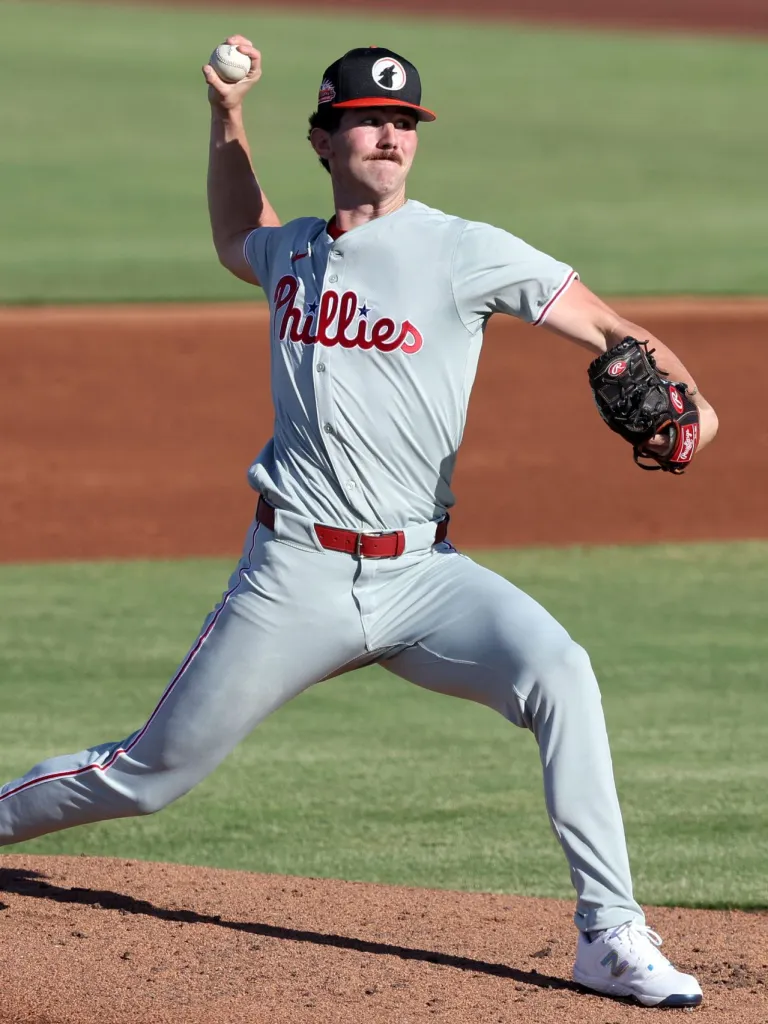
Cabrera’s physical build doesn’t immediately resemble the typical big-league starter.
Listed at 6-foot and roughly 145 pounds — though that number may no longer be accurate — he lacks the imposing frame often associated with durable rotation arms.
It’s something his teammates have noticed as well, sometimes jokingly.
But those same teammates have also helped guide his development.
Cabrera has spent time learning from fellow pitchers Jesús Luzardo and Cristopher Sánchez, observing their preparation routines and adjusting his own approach.
“It’s been more about creating the habit of having a routine and being ready for games,” Cabrera explained. “You never know when you’re going to be needed, and whenever you are, you have to be ready.”
Veteran pitchers have also encouraged him to add strength in order to withstand the workload of a full major league season.
“They feel like I’m a good pitcher and that I have what it takes to pitch at that level,” Cabrera said. “They want me to gain some weight in order to be ready and healthy for 30 starts and 200-plus innings.”
Manager Rob Thomson has seen steady progress.
“Cabrera is a guy that’s getting better and better,” Thomson said. “His changeup was excellent and his fastball just keeps improving. He has pretty good command out there.”
Still, it may be premature to view him as a reliable rotation solution.
Limited alternatives behind the rotation
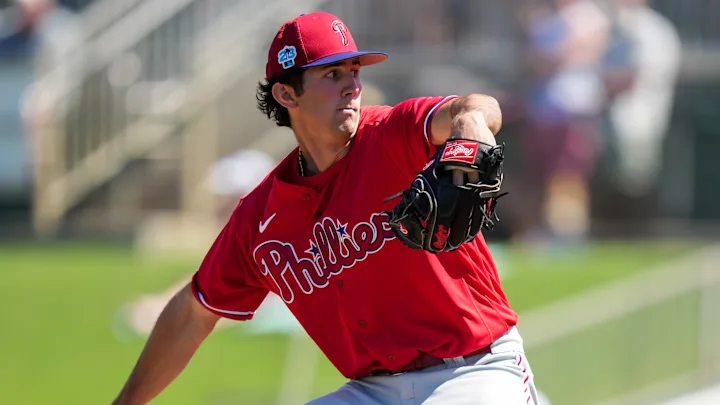
Cabrera is far from the only name the Phillies have considered.
Moisés Chace, another promising pitching prospect, appeared on track to become part of the organization’s depth before suffering a major setback. After posting a 3.24 ERA through six starts at Double-A Reading last season, Chace underwent Tommy John surgery in June and will miss significant time.
Most of the remaining pitching prospects in the Phillies’ Top 30 are still several developmental steps away from the majors.
One intriguing name is Gage Wood, the team’s first-round pick last year out of Arkansas.
Wood possesses strong confidence and the type of makeup that could allow him to move quickly through the system. However, his collegiate workload was limited. He made only 13 starts in college, with most of his appearances coming out of the bullpen.
For that reason, the Phillies are unlikely to rush him into a starting role this season, though he could eventually contribute in relief.
Veterans may provide temporary answers
In the meantime, Philadelphia is exploring alternative solutions.
One possibility is veteran Bryse Wilson, whom the club has been stretching out as a potential swingman.
Wilson has spent most of his career working in long relief, and the last time he started more than ten games in the majors was in 2022 with Pittsburgh, when he posted a 5.52 ERA.
Still, his early spring outings have caught Thomson’s attention.
Wilson has delivered two scoreless appearances across two innings each, demonstrating strong command and an ability to keep hitters off balance.
“I like Bryse Wilson,” Thomson said. “He can really pitch. He’s not gonna break a radar gun, but he can put some command on the baseball and keep people off balance.”
Another depth option mentioned by Thomson is Alan Rangel, who worked primarily out of the bullpen last season.
Even with those names in the mix, the organization’s starting pitching depth remains thin.
A question still hanging over the roster
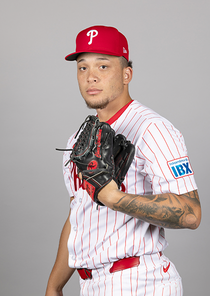
Early in the offseason, president of baseball operations Dave Dombrowski acknowledged that improving starting pitching depth remained a priority.
So far, no additional moves have been made.
Thomson declined to speculate on whether that might change before the season begins.
“I don’t know,” Thomson said. “We’ll see how things go the rest of the way. If we’ve got eight right now, I feel fine about that.”
For the Phillies, the rotation itself may be one of the team’s biggest strengths entering 2026.
But the real test may come later — if injuries force them to look beyond it.
Leave a Reply