Zohran Mamdani’s Indian heritage is rightly celebrated in India even though the vastness of Indianness remains under-appreciated.
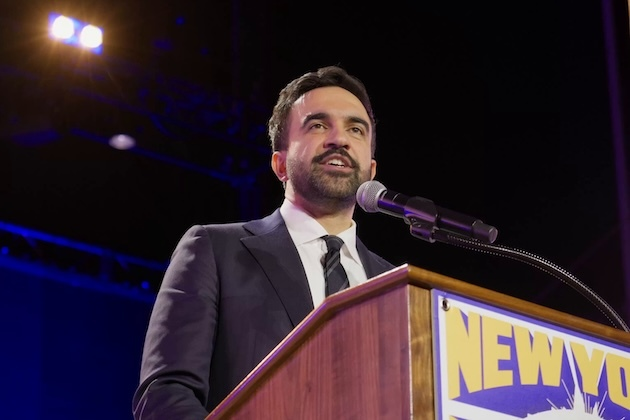
By winning the mayoral election of New York, Zohran Mamdani has achieved what an immigrant had never been able to. At least not one who identifies as a Muslim, and is of Indian heritage from both his parents. His father, academic Mahmoud Mamdani, though raised in Uganda, is of Khoja Muslim descent and his mother, filmmaker Mira Nair, is a Punjabi Hindu from the trader sub-caste of Khatris.

Zohran identifies as a Muslim of the Ithna Asheri sect of Shias; couple that with his Khoja ancestry and it shows us that like his multi-continent, multi-cultural and layered upbringing, his Muslim identity too is variegated. His father Mahmoud, born in a Khoja family, grew up along the two ends of a community’s historical evolution: from the ancient land of Kutch and Kathiawad which was a part of the region where the Indus Valley Civilisation thrived over 5,000 years ago, the Khoja Muslims, following ancient trade links, left for east Africa in the middle of the 19th century.
Who are the Ithna Asheri and what’s the link with Khojas?
Khojas are widely believed to have been Hindus from the Lohana, a Vaishya or trader caste, who converted in large numbers upon the persuasion of a Sufi ascetic, Sadr-a-Din in the 15th century. The Ithna Ashari or the Twelver Shias sect believes that after Prophet Mohammad, twelve other spiritual guides or Imams succeeded, the last Imam — Mohmmad al Mahdi will reincarnate or reappear again, much like the Hindu belief in the awaited incarnation of Vishnu’s last avatar Kalki. However, the first conversion of the Hindus from the Lohana caste was into the Nizari sect of Shias. After the Twelvers, the Nizaris are the largest sect among Shias. The process of Muslims ascetics and preachers entering the subcontinent had begun in the 7th century itself. As Sindh, Balochistan and today’s Pakistan formed the frontier region for the rest of the undivided Indian subcontinent, it was natural that most of the acculturation and changes in religious landscape happened there first.
Farhad Daftary writes in The Ismailis: Their history and doctrines, “Pir Sadr al-Din, to whom the largest number of ginas (devotional Gujarati scriptures) is attributed, played a key role in the propagation and organisation of the Nizari da’wa in India. He is reported to have died sometime between 1369 and 1416; Sadr al-Din converted large numbers of Hindus from the Lohana caste and gave them the name of Khoja, derived from the Persian word khwaja, meaning lord or master. This name corresponded to the Hindu term Thakur (or thakkar), also meaning master, by which the Lohanas were addressed, since they were regarded as Kshatriyas. The Lohanas and Khojas still use this title among themselves”.
For more than five hundred years, most of the Khoja Muslim communities like the Mamdanis remained in the the Nizari sect, but, started embracing Ithna Ashari or Twelver Shiaism, after the infamous Aga Khan case in 1866, and when they moved to East Africa.
According to Iqbal Akhtar, author of The Khoja of Tanzania: Discontinuities of a Postcolonial Religious Identity, “Its etymology is twofold. Mam is an honorific title in Kachchhi and Gujarati languages, meaning kindness, courage and pride. Mamado is a local version of the name Muhammad that often appeared in surnames in Hindu castes that converted to Islam, such as the Memons.”
Disappearing syncretic heritage of Khojas
Sadr-al-Din had amalgamated Islamic and Hindu beliefs, which was crucial in spreading Islam among Hindus. Akhtar writes, “Khojapanth was an eclectic combination of various Indic religions, from sadhupanth (‘ascetic philosophies’) to more mainstream traditions like the Vaishnava religion, suffused with Islamic mysticism. A dynamic unity was created on which Khoja religious philosophy was based, both in theory and in praxis. For example, some of the medieval Vaishnava Khōjā prayers illustrating this dynamism, reprinted in the nineteenth and twentieth centuries, have survived. One such prayer is the Viśanapurī (‘The Perfected Viṣṇu’), which begins with an Indic Genesis-like genealogy of creation, continuing through a list of the avatars of Vishnu and of Khajā demi-avatars, until the eighth avatar of Vishnu, the Buddha. The Khoja demi-avatars emanate from the Buddha, uniting Hinduism, Buddhism, Judaism, Christianity, and Islam into a continuum.”
However, with multiple crises like the Aga Khan case, the colonial policy of communal divide and growing pressure to conform to normative Islam, the 19th and 20th centuries saw the Khojas re-orient themselves. What began as an adoption of Twelver Shiasm and Sunni Islam by some in the wake in the late 19th century turned into a comprehensive reimagining of Khoja-ness by sanitising it with mainstream Islamism.
Akhtar adds, “In the twenty-first century, contemporary Khoja identities are the summation of a century of communal policies, resulting in a systematic amnesia about the pre-Islamic and medieval Indic heritage of the Khōjā in exchange for narratives of Near Eastern Islamic religious identity and ritual practice. The Khoja practice of imagining Near Eastern genealogies was instrumental in this enterprise, linking the medieval Indic heritage of the Khoja to earlier Arabic and Persian religious authorities. For the two Shia Khōjā communities, Āgākhānī and Ithnā ʿAsharī, modern religious identity and caste status is found through three avenues: service to the community (sēvā), loyalty to the imam of the age, and ideological conformity to and zeal for the established orthodoxy. Resisting this modern ideological definition of Khōjā identity can result in communal marginalization and, in extreme cases, a modern equivalent to the medieval practice of outcasting”.
Zohran Mamdani’s Indian heritage is rightly celebrated in India even though the vastness of Indianness remains under-appreciated.
Leave a Reply