The New York Mets don’t need a reminder of how quickly a season can unravel.
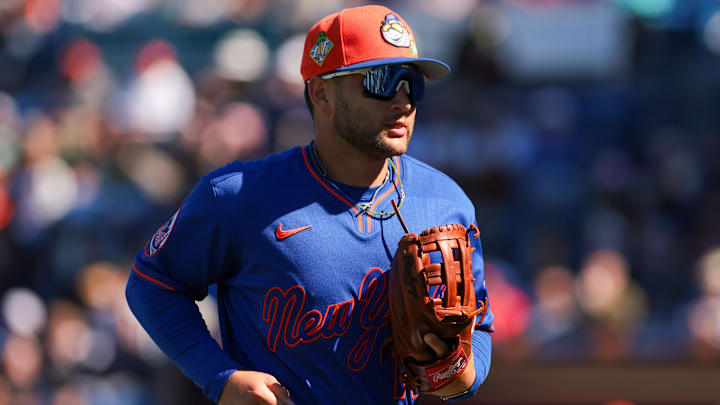
Feb 24, 2026; Port St. Lucie, Florida, USA; New York Mets third baseman Bo Bichette (19) returns to the dugout against the Houston Astros during the third inning at Clover Park. Mandatory Credit: Sam Navarro-Imagn Images | Sam Navarro-Imagn Images
In 2025, they surged to the best record in baseball by mid-June — only to collapse down the stretch and miss the postseason entirely. It was a stunning reversal that forced a hard reset across the organization.
This offseason reflected that urgency.
David Stearns reshaped the roster, moving on from core pieces like Brandon Nimmo and building a team designed to compete immediately. On paper, the Mets look like contenders again, with strong projections and a high probability of returning to October.
But projections don’t carry games into the sixth inning. They don’t drive in runs with two outs. And they certainly don’t close out tight games in September.
That responsibility falls on players.
And for the Mets, three names stand above the rest.
Nolan McLean must become more than a breakout story
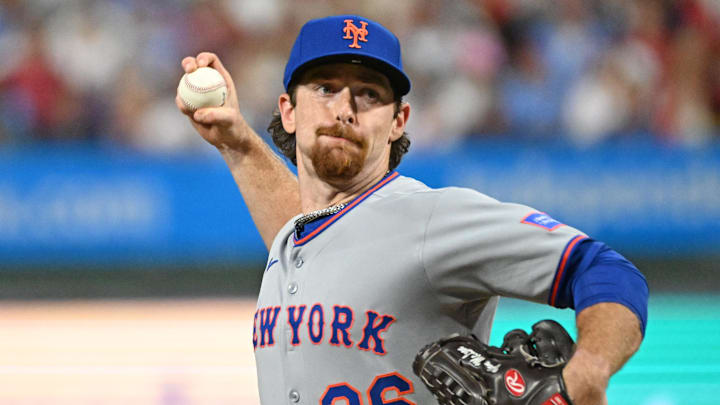
Sep 8, 2025; Philadelphia, Pennsylvania, USA; New York Mets pitcher Nolan McLean (26) throws a pitch during the fourth inning against the Philadelphia Phillies at Citizens Bank Park. Mandatory Credit: Eric Hartline-Imagn Images | Eric Hartline-Imagn Images
Last season, Nolan McLean was a revelation.
In a limited sample, the 24-year-old right-hander dominated opposing hitters, posting a 2.06 ERA while showcasing one of the most electric pitch arsenals in baseball. His breaking pitches — particularly his curveball and sweeper — generated elite spin rates and were nearly unhittable at times.
But 2026 is a different test.
The Mets don’t just need flashes from McLean. They need reliability.
Their rotation struggled to provide length last season, forcing the bullpen into heavy workloads and exposing a lack of consistency. McLean was one of the few starters who consistently worked deep into games, making his role even more critical moving forward.
If he can sustain that level — both in effectiveness and durability — he stabilizes the entire pitching staff.
If he can’t, the same issues that derailed 2025 could resurface quickly.
For a team built to win now, McLean isn’t just a promising arm.
He’s a necessity.
Bo Bichette has to replace more than just production

Mar 5, 2026; West Palm Beach, Florida, USA; New York Mets third baseman Bo Bichette (19) celebrates after scoring against the Washington Nationals during the first inning at CACTI Park of the Palm Beaches. Mandatory Credit: Sam Navarro-Imagn Images | Sam Navarro-Imagn Images
When the Mets brought in Bo Bichette, they weren’t just adding a hitter.
They were replacing a void.
The departures of Pete Alonso and Brandon Nimmo removed two of the team’s most dependable run producers, particularly in high-leverage situations. Bichette is expected to fill that gap — and then some.
Few players in baseball have been better with runners in scoring position.
Bichette’s ability to deliver in key moments makes him a natural fit in the heart of the lineup, especially hitting behind Francisco Lindor and Juan Soto. If he performs to his standard, the Mets’ offense becomes far more dangerous.
But there are layers of uncertainty.
Health is one. Bichette is coming off an injury-affected season that limited his production. The Mets need the version of him that consistently produces, not the one still trying to regain form.
Defense is another.
Transitioning to third base adds complexity. The Mets don’t need elite defense from him — but they do need stability. With the team already ranking near the bottom in defensive metrics last season, any regression could prove costly.
Bichette doesn’t need to be perfect.
But he does need to be dependable — at the plate and in the field.
Devin Williams carries the weight of the ninth inning
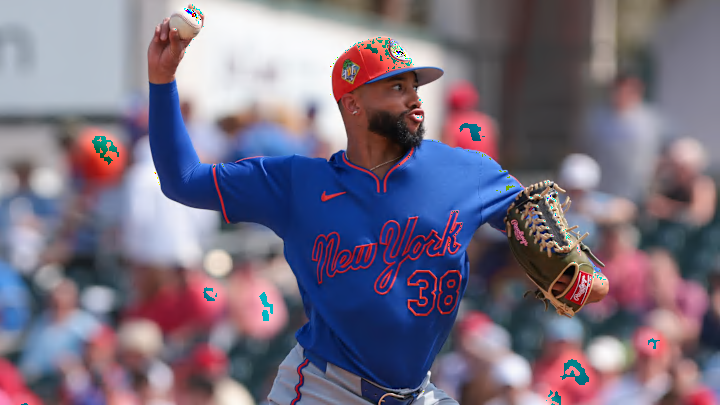
Feb 27, 2026; Jupiter, Florida, USA; New York Mets pitcher Devin Williams (38) delivers a pitch against the St. Louis Cardinals during the fourth inning at Roger Dean Chevrolet Stadium. Mandatory Credit: Sam Navarro-Imagn Images | Sam Navarro-Imagn Images
Replacing Edwin Díaz was never going to be simple.
For years, Díaz provided the Mets with one of baseball’s most reliable closers — a pitcher who could lock down games with consistency and dominance. Now, that role belongs to Devin Williams.
And it comes with pressure.
Williams has the pedigree. At his best, he’s been one of the most effective relievers in the game, combining strikeout ability with elite pitch movement. Even last season, despite inconsistent results, his underlying metrics suggested he remained among the league’s top arms.
But results matter in the ninth inning.
After a difficult stretch in 2025 that saw him lose the closer role, Williams enters this season with something to prove. The Mets are betting that he can return to form — and handle the responsibility that comes with it.
Because for a team with playoff aspirations, the margin is thin.
Games will come down to late innings. Leads will need to be protected. And confidence in the bullpen will shape how aggressively the team can manage the rest of the game.
If Williams locks down that role, the Mets gain stability.
If he falters, the ripple effects could be significant.
A season defined by execution, not expectation
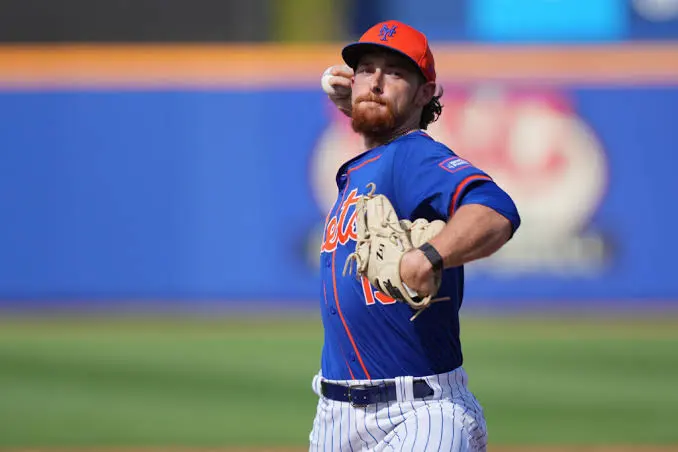
The Mets have talent.
They have depth. They have star power. And they have the kind of roster that should compete deep into October.
But they’ve been here before.
The difference between 2025 and 2026 won’t come down to projections or offseason headlines. It will come down to whether key players deliver when it matters most.
McLean must anchor the rotation.
Bichette must drive the offense.
Williams must finish games.
If those three pieces fall into place, the Mets have everything they need to contend.
If not, the story may feel all too familiar.
Leave a Reply