The Philadelphia Phillies didn’t envision this scenario when mapping out their season.
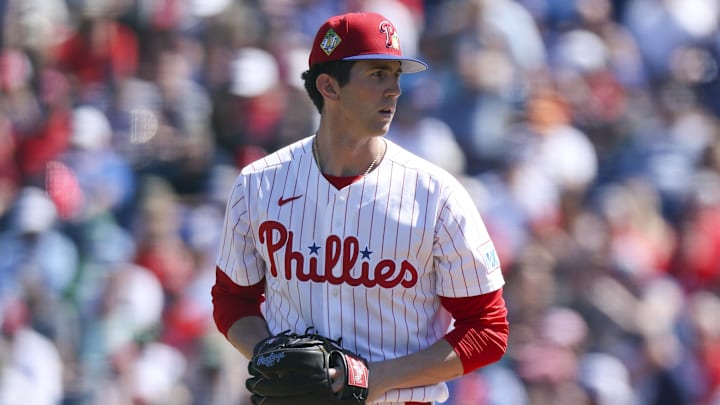
Andrew Painter’s opponents were 7-for-41 (.171) in spring training. | Nathan Ray Seebeck-Imagn Image
A three-game skid, a quiet offense, and now the spotlight shifts to one of their brightest young arms. Andrew Painter is set to make his long-awaited debut—not in a moment of comfort, but in the middle of early-season turbulence.
It’s a situation that could easily feel overwhelming.
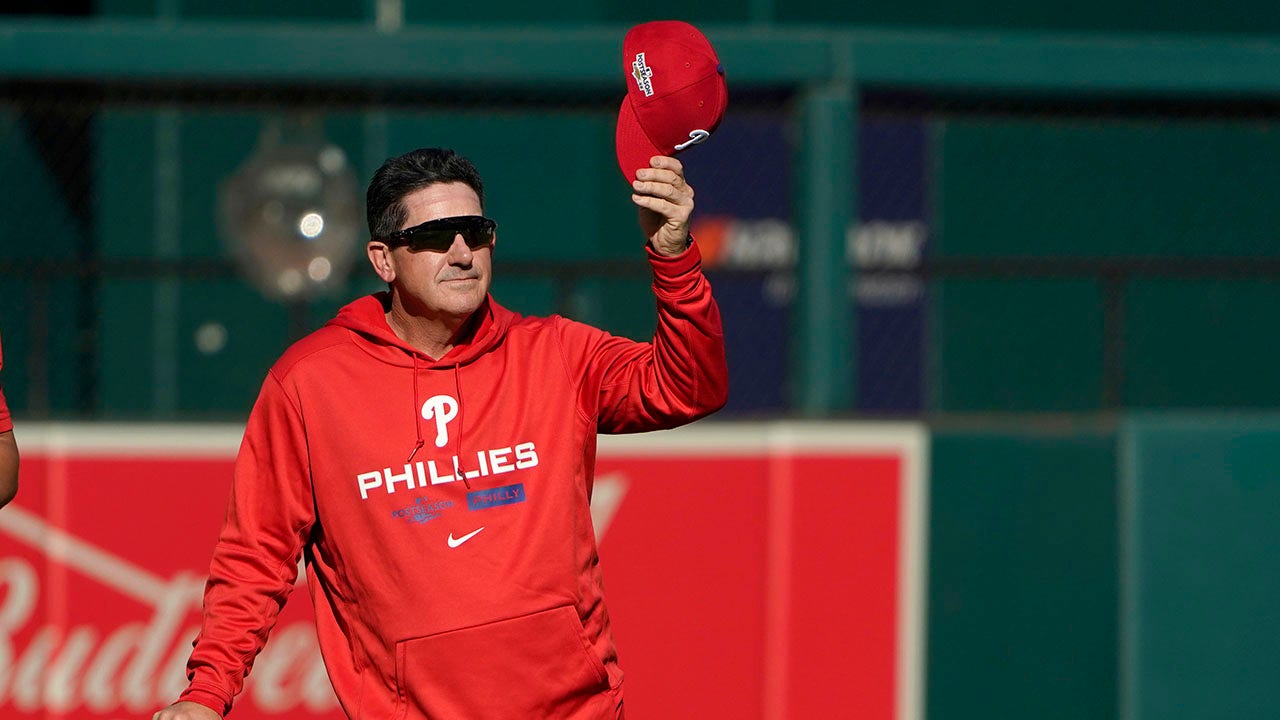
But manager Rob Thomson isn’t framing it that way.
Rather than asking Painter to stop the losing streak on his own, the focus is far more measured. The goal isn’t dominance—it’s composure. A handful of effective innings, solid command, and keeping hitters off balance would already mark a successful first outing.
That perspective matters, especially given the circumstances.
Philadelphia’s recent stretch has exposed issues beyond pitching. Losses to the Texas Rangers and Washington Nationals have been defined by sluggish offense and early deficits, leaving little margin for any starter—rookie or veteran.
Painter, in many ways, is stepping into the storm.
Still, there are reasons for optimism.
His spring training performance offered a glimpse of what he can bring. He limited baserunners, kept hitters off balance, and showed the kind of command that has long made him one of the organization’s most anticipated prospects.
Preparation has also been intentional.
Painter recently threw a simulated game at Citizens Bank Park, allowing him to get comfortable with the mound and surroundings before his debut. For a young pitcher, even small adjustments like that can make a meaningful difference.
But the bigger picture extends beyond just one start.
After throwing a career-high workload last season, the Phillies are expected to monitor his innings closely. Having already undergone Tommy John surgery earlier in his career, Painter’s long-term health remains a priority.
That could shape how the team uses him all year.
A six-man rotation, occasional skipped starts, and careful monitoring of velocity and mechanics are all on the table. The Phillies aren’t just thinking about April—they’re thinking about October.
In the short term, though, the formula is simple.

Throw strikes. Trust the arsenal. Stay composed.
Painter brings a deep mix of pitches, from a lively fastball to multiple breaking balls and off-speed options. That versatility gives him tools to compete immediately, even against big-league hitters.
What happens next may depend less on him—and more on the lineup behind him.
If the Phillies can provide early run support, it could ease the pressure and allow Painter to settle into his rhythm. If not, the challenge becomes steeper.
Either way, this debut marks the beginning of something significant.
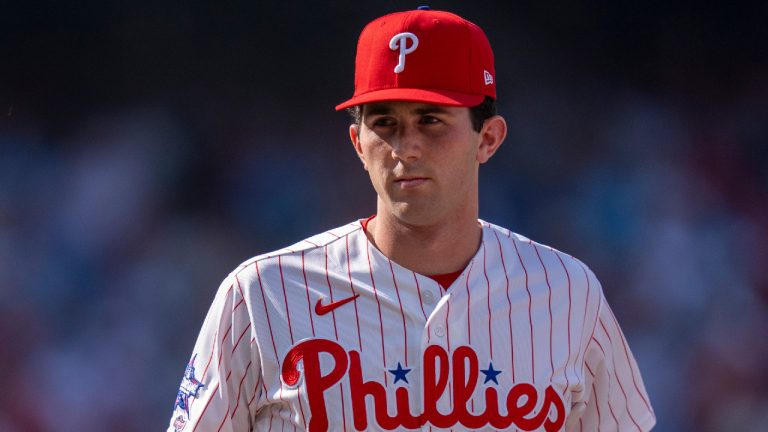
Not just for Painter, but for a team searching for stability. And while the expectations are being carefully managed, the moment itself carries weight—because it’s the first step in what the Phillies hope will be a long and impactful journey.
Leave a Reply