The Chicago White Sox didn’t just stumble out of the gate.
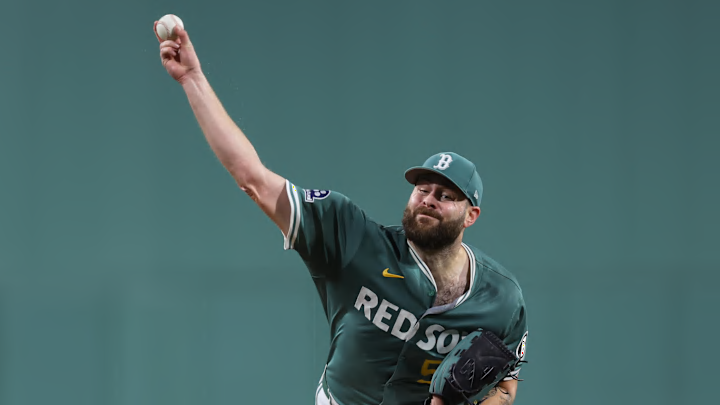
Sep 12, 2025; Boston, Massachusetts, USA; Boston Red Sox starting pitcher Lucas Giolito (54) delivers a pitch during the first inning against the New York Yankees at Fenway Park. Mandatory Credit: Paul Rutherford-Imagn Images | Paul Rutherford-Imagn Images
They’ve unraveled.
One week into the 2026 season, a team that spent months talking about progress and internal growth now finds itself at 1–5, buried under a wave of early-season issues. Mistakes in the field, inconsistent hitting, questionable decisions—those have all played a role.
But the real problem is on the mound.
Right now, the White Sox own the worst ERA in baseball at 8.63. Even more alarming, they’ve already allowed significantly more earned runs than any other team—and it’s only been six games.
That kind of gap doesn’t happen by accident.
And it’s why frustration is boiling over.

After a lopsided loss to Miami, fans didn’t just vent about the game—they pointed directly at the front office. One name kept coming up: Lucas Giolito.
Still unsigned. Still available.
And suddenly, more relevant than ever.
The criticism isn’t just emotional—it’s rooted in a larger concern about how this roster was built. From the beginning, the White Sox made it clear that their 2026 plan centered on internal development. The belief was that young arms would take the next step and stabilize the rotation.
But that strategy came with risk.
And right now, that risk is being exposed.
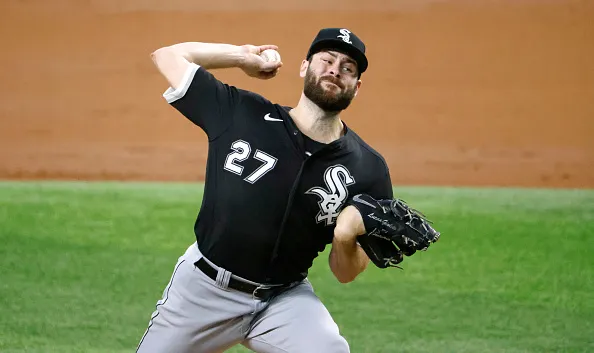
The starting rotation hasn’t just struggled—it hasn’t lasted. Pitchers are failing to get deep into games, forcing the bullpen into extended roles far earlier than expected. Opening Day starter Shane Smith hasn’t completed five innings across two outings. Others have followed a similar pattern, unable to provide length or consistency.
That creates a ripple effect.
The bullpen, which was supposed to be a strength after offseason additions, is already being stretched thin. Instead of stabilizing games, it’s being overused—and the results have been uneven at best.
It’s not sustainable.
And that’s where the Giolito conversation becomes unavoidable.
After a solid 2025 season, Giolito remained on the market deep into the offseason. For a team clearly in need of a reliable veteran arm, the fit seemed obvious. He could have provided innings, leadership, and stability to a rotation filled with uncertainty.

Instead, the White Sox chose to stand pat.
Now, that decision is under a microscope.
Even if the organization wanted to act now, the timing works against them. A late signing would require time for Giolito to build up, meaning he wouldn’t be an immediate solution. The window to address the issue cleanly has already passed.
That’s what makes this situation more frustrating.
The need was known. The option was available. The move wasn’t made.
To be fair, it’s still early. A six-game sample doesn’t define a season, and it’s unlikely the pitching staff remains this ineffective over 162 games.
But the concern isn’t just about performance.
It’s about structure.

Right now, the White Sox don’t just look like a team struggling—they look like a team that may have miscalculated. If the rotation continues to falter and the bullpen continues to wear down, the problems will compound quickly.
And the losses will follow.
For fans, this isn’t just about what’s happening now.
It’s about what could have been avoided.
Because sometimes the most frustrating outcomes aren’t the surprising ones.
They’re the ones you saw coming.
Leave a Reply