For years, the script looked locked in: Canada would quietly buy 88 American F-35s, write a massive check to Lockheed Martin, nod at Washington, and call it “modernization.”
But something has shifted — and it’s much bigger than aircraft.
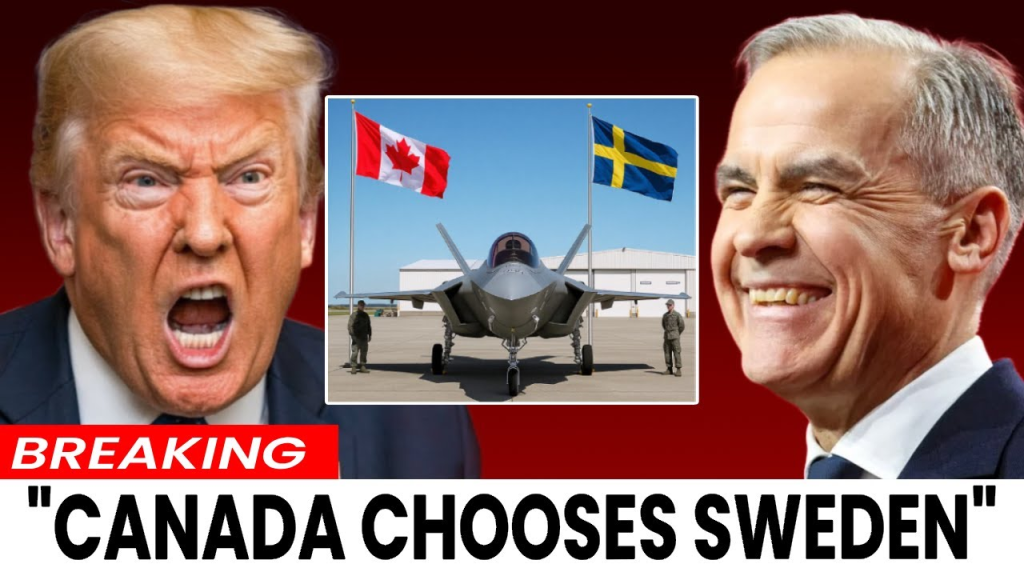
In the shadows of trade wars, tariffs, and Trump’s open contempt for Canada, an unexpected challenger has slid into the frame: Sweden’s Gripen fighter. And now, with Rolls-Royce stepping in to potentially power it, this “underdog jet” is threatening not just the F-35 deal, but the entire system of U.S. military control over its allies.
Canada’s air force doesn’t operate in cozy European skies. It defends brutal Arctic cold, endless distances, and remote runways that look more like frozen strips of highway than modern bases. It needs jets that can launch from short, icy surfaces, fly far, be fixed fast, and survive the worst conditions on Earth.
The Gripen was designed for exactly that.
Agile, rugged, affordable, it’s built to land on roads, refuel in minutes, and get back in the fight while other jets are still in the hangar. In Ukraine, where airfields are hunted by Russian missiles, that kind of flexibility is the difference between losing jets on the ground and still being able to fight.
But there has always been one problem: the heart of the Gripen — its engine — is American.
Right now, the Gripen uses a U.S.-made General Electric engine, which gives Washington an invisible hand on the throttle. That one component means the United States can decide who buys the jet, how it’s exported, and under what conditions it flies. On paper, it’s a Swedish aircraft. Deep down, there’s still a Washington leash attached.

Now Rolls-Royce might be about to cut that leash.
If the British engine giant develops a new powerplant for the Gripen, everything changes. Suddenly, the Swedish jet becomes truly sovereign — no U.S. vetoes, no hidden export strings, no quiet pressure from the Pentagon. For any country tired of being told when and how it’s allowed to defend itself, that’s a game-changer.
For Canada, it’s explosive.
The F-35 program has already turned into a budget bonfire. A Canadian audit shows the cost of the deal has jumped from about $19 billion to nearly $28 billion since it was signed in 2022. Each plane is expected to cost around $200 million over its lifetime. And that’s before you add billions more for infrastructure, training, new tankers, and maintenance tailored to the F-35.
By contrast, the Gripen E comes in at a little over half the price, with lower operating costs and simpler logistics. It fits Canada’s existing hose-and-drogue refueling system instead of forcing Ottawa to buy four new boom-equipped tankers at a cost of roughly $1.5 billion. It can have its engine swapped in under 40 minutes. Small teams can keep it flying from rough, dispersed airstrips that would make an F-35 crew break out in a cold sweat.

And now, with Ukraine planning to buy up to 150 Gripens, Saab’s production lines are ramping up. Canada is perfectly placed to be more than a customer — it could become a manufacturing hub. Talks between Saab and Bombardier to assemble Gripens in Canada, including some of Ukraine’s order, hint at a future where Canadian workers build jets not just for their own air force, but for allies too.
That’s not just defense. That’s industrial power.
Meanwhile, Trump’s tariffs and insults have pushed Ottawa closer to Europe. Spain has shelved its F-35 plans. Britain’s own F-35 fleet faces harsh criticism. Allies are starting to ask: Why keep pouring money into a temperamental, hyper-expensive aircraft when a cheaper, flexible, politically independent alternative exists?
Inside Ottawa, the debate is shifting fast.
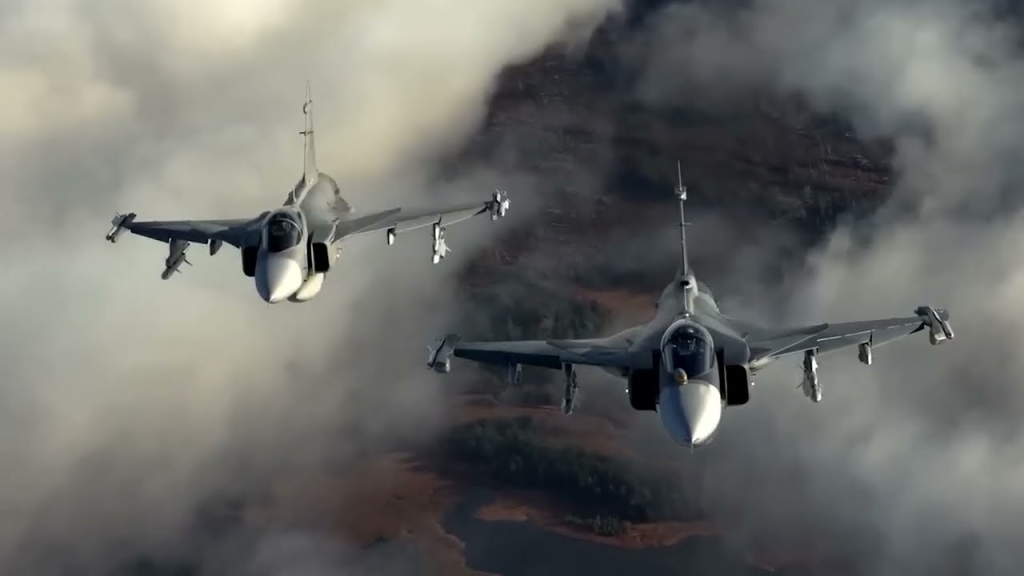
Canada has only paid for 16 of the 88 planned F-35s. Analysts say that leaves room for a mixed fleet: a limited number of F-35s for specific stealth missions, paired with dozens of Gripens for day-to-day defense, Arctic patrols, and rapid response. That combo keeps NATO happy while quietly cutting Washington’s chokehold on Canada’s skies.
The final decision isn’t public yet. The review ordered after Mark Carney took office is still under wraps. But the outline is visible: more sovereignty, more jobs, less dependence. A Canadian aerospace revival built around a jet that doesn’t come with a U.S. permission slip.
Because in the end, this isn’t just about what Canada flies.
It’s about who really controls the sky.
Leave a Reply