Miami delivered a stunner on December 9, 2025: Eileen Higgins won the city’s mayoral runoff, defeating Trump-backed Emilio González and ending nearly three decades without a Democrat in the office. The race is officially nonpartisan, but nobody in Florida is treating it that way tonight. This win is being read nationally as a flashing warning light for MAGA power in one of its most symbolic backyards.
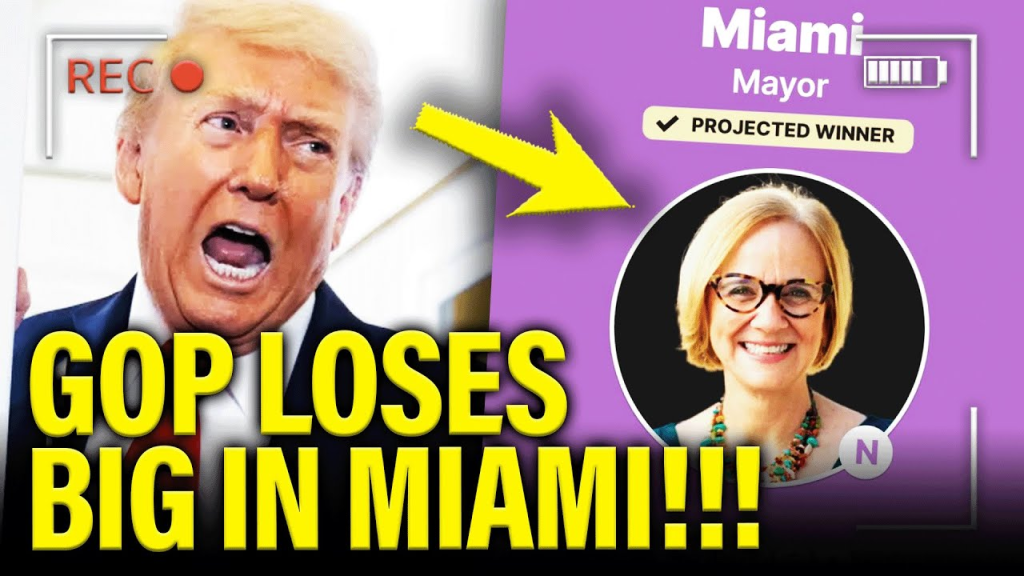
With all precincts reporting, Higgins took about 59% of the vote to González’s 41%—a decisive ~19-point margin that stunned even seasoned Miami watchers. She becomes Miami’s first Democratic mayor since 1997 and the city’s first woman mayor in its history.
What makes the result feel like a political earthquake is the context. The outgoing mayor, Francis Suarez, a Republican, was term-limited after comfortably holding City Hall for years. In 2021, Suarez cruised to reelection by a massive landslide, reinforcing the assumption that the mayor’s seat was effectively “safe” for GOP-leaning candidates. Higgins’ win flips that storyline hard—and fast.
González didn’t just run as a generic local figure. He leaned into heavyweight conservative backing, including multiple public endorsements from Donald Trump and other top Florida Republicans, turning the runoff into a surrogate battle over the direction of the Trump era.
And for many voters, that became the race.
Miami is a city where a majority of residents are foreign-born and where immigration policy isn’t an abstract headline—it’s the air people breathe. Higgins made that reality central to her campaign, repeatedly framing Trump-aligned politics as bad for families, neighborhoods, and the economy. She ran on restoring competence to city government and pushing back against what she described as an atmosphere of fear around immigrant communities.
The campaign also unfolded against long-running frustration with City Hall. Miami politics has been dogged for years by allegations of dysfunction and corruption. In interviews during the race, Higgins hammered the theme that the city’s “flagship brand” was being embarrassed by scandal and mismanagement, especially as residents struggle with housing affordability and climate resiliency.
Meanwhile, González entered with baggage of his own. He’s a former city manager and well-known figure, but his past in local government was repeatedly attacked in the runoff, feeding Higgins’ narrative that Miami needed a clean break from the old power network.
Put it together and you get a result that feels bigger than a municipal contest. National Democrats are already pointing to Miami as part of a wider late-2025 trend: unexpected over-performances in competitive and even red-leaning areas, driven by backlash to Trump-era governance. Republicans, meanwhile, are scrambling to explain how a city they’ve held for almost 30 years just slipped away by nearly twenty points.
Higgins now inherits a city under pressure—sky-high costs, deep housing stress, and rising climate risks—but she also steps into office with something rare in Miami politics: a clear mandate. She told supporters voters chose “competence over chaos,” and her allies are framing her win as proof that Miami’s electorate is not locked in any party’s pocket.
Tonight, the takeaway is sharp: Trump’s endorsement didn’t lift González—it branded him. And in a city built by immigrants, that brand turned into an anchor. Miami didn’t just elect a mayor. It fired a warning shot.
Leave a Reply