Trump’s Caribbean War Just Became the Biggest Scandal of His Term
When a retired four-star general goes on TV and calmly says the quiet part out loud, you know something is very wrong.
General Barry McCaffrey looked at the U.S. military build-up in the Caribbean and didn’t see a “war on drugs.” He saw war plans.
B-1 and B-52 bombers.
An attack submarine.
A carrier strike group.
Marine amphibious forces.
Army Special Operations units.
In plain English: the United States now has everything it needs in place to invade Venezuela or decapitate its armed forces. Not to save American kids from fentanyl. Not to stop “narco-terrorists.” But to crack open Venezuela’s oil fields for Trump’s billionaire friends.
And the President never came to Congress for authorization.
That’s not just bad policy. That is a full-on War Powers crisis—wrapped in a potential war crime.
The Boat Strike That Changed Everything
The White House and Defense Secretary Pete Hegseth have been trying to sell their Caribbean campaign as a heroic mission against drug cartels. They posted edited footage of a Venezuelan “narco boat” being blown out of the water, bragged about killing traffickers, and framed it as tough-on-crime patriotism.
Then we learned the video was not the whole story.
Behind closed doors, members of Congress were shown the unedited footage from the September 2nd strike. What they saw left seasoned lawmakers shaken.
According to Rep. Adam Smith, ranking member on the Armed Services Committee, the full video shows:
- A boat already incinerated and capsized
- Two shirtless men, stranded on wreckage “that could barely have fit four people”
- No weapons
- No radio
- No visible means of escape or communication
In his words, it looked like “two classically shipwrecked people” clinging to life.
And then they were hit again. Second strike. Third strike. Fourth. Until they were dead.
Rep. Jim Himes, another lawmaker who saw the full video, put it bluntly: these weren’t combatants; they were survivors. Under the laws of war and the Pentagon’s own rules, once someone is out of the fight and incapable of attacking you, you cannot legally kill them.
But that’s exactly what happened.
War on Drugs? Or Cover for Regime Change?
The administration keeps repeating the words “narco terrorists” like a magic legal spell. But the facts don’t line up.
- Cocaine is produced in Colombia, not Venezuela.
- Venezuela is mainly a transit route, not a primary source.
- The real mass-killer drug in America right now is fentanyl, which comes through Mexico, not Venezuelan fishing boats.
If this is really about drugs, why did Trump just pardon Juan Orlando Hernández, the former president of Honduras who was convicted of helping turn his country into a narco-state, partnering with cartels like El Chapo’s?
Trump’s own DOJ once said Hernández helped make Honduras “one of the most dangerous countries in the world.” He was sentenced to 45 years. Trump let him walk after barely serving a year.
You don’t pardon a kingpin and then pretend you’re a moral crusader against drug boat “terrorists.”
As Gen. McCaffrey notes, this looks a lot less like a counternarcotics campaign—and a lot more like regime change wrapped in a drug war costume, aimed at opening Venezuela’s oil to companies like Shell, ExxonMobil, and BP.
“Your Wish Is Our Command”: Pete Hegseth’s Bloodlust
If the strategy is disturbing, the mindset behind it is terrifying.
Defense Secretary Pete Hegseth has been amplifying sociopathic posts from MAGA influencers cheering on more boat strikes. One podcaster wrote:
“Every new attack aimed at Pete Hegseth makes me want another drug boat blown up and sent to the bottom of the ocean.”
Hegseth’s public reply?
“Your wish is our command. Just sunk another narco boat.”
This is not sober, reluctant use of lethal force. This is content-driven bloodlust from the man in charge of the U.S. military.
And while he’s bragging on social media, the Pentagon’s own Judge Advocate Generals and legal experts are warning: treating any group Trump unilaterally labels “foreign terrorists” as a green light for war—hundreds or thousands of miles from U.S. shores—is chilling, lawless territory.
If the president can kill people on a boat 1,000 miles away because those drugs might eventually reach the U.S., what’s the limiting principle? Who couldn’t he target with that logic?
Crushing Dissent Inside the Pentagon
The lawlessness doesn’t stop on the water.
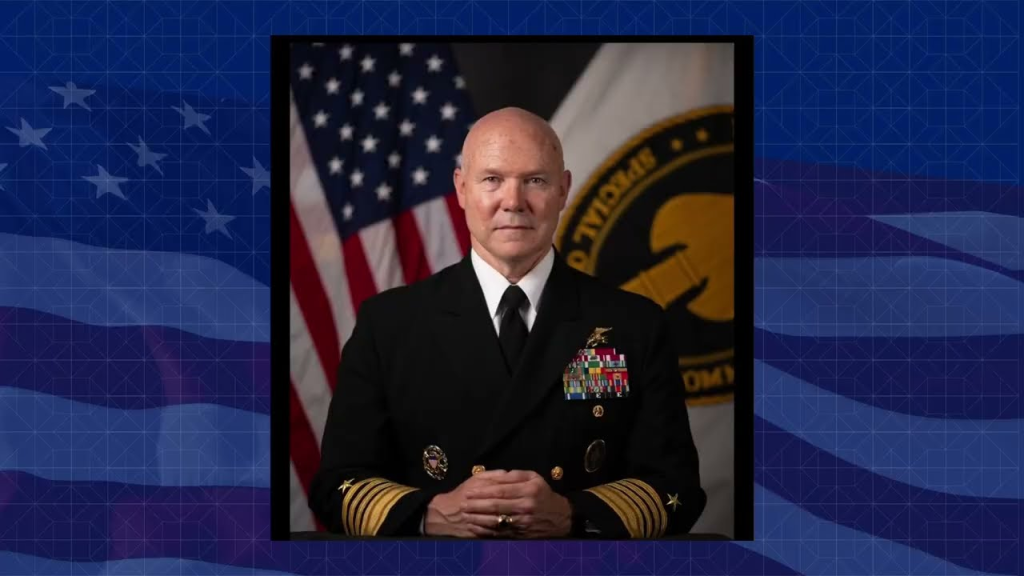
We now know that Admiral Alvin Holsey, a highly respected four-star in charge of the Central American corridor, is being forced into early retirement—barely a year into his command.
His apparent “crime”? Raising concerns about the legality of these boat strikes and being suspected of leaking to the press.
According to reporting, Hegseth told him:
“You are either on the team or you’re not. When you get an order, you move out fast and don’t ask questions.”
That is not how a democracy runs a military. That is how a strongman runs a private army.
With Holsey shoved out, what message does that send to other admirals, including Admiral Frank Bradley—the commander who just told Congress he stands by the second, third, and fourth strikes that killed the shipwrecked survivors?
Speak honestly and you risk your career. Toe the line and you get promoted.
That’s how you quietly turn the Pentagon into a political enforcement arm.
The War Powers Crisis Everyone’s Pretending Isn’t Happening
Under the Constitution and the War Powers Resolution, presidents are not supposed to start open-ended hostilities without Congress. Yet Trump has:
- Deployed massive combat power to the Caribbean
- Ordered lethal strikes on Venezuelan boats
- Claimed the power to designate “narco groups” as foreign terrorist organizations and treat them as wartime targets
All without seeking a specific authorization from Congress.
MAGA senators like Tom Cotton are now running cover, insisting that the president has “inherent authority” to do this and comparing it to past counterterror operations. But legal scholars, former national security officials, and military lawyers are sounding the alarm.
As Ben Rhodes, Obama’s former national security adviser, explained, this is exactly why we have laws of war: so that people in duress, shipwrecked, wounded, or trying to surrender are not simply executed from the sky.
If we normalize this—if we accept that the president can blow up stranded men on a burning hull in the name of “maybe someday those drugs would have reached us”—then there is almost no limit to who can be killed, where, or why.
A Rogue Presidency, a Complicit Congress
The scariest part? Congress, so far, has done almost nothing.
Yes, a handful of Democrats have spoken out. A few lawmakers have watched the full video and called it what it is—a moral and legal disgrace. But the Republican leadership? They’re either silent or parroting the White House lines about “getting back into the fight.”
Meanwhile, Trump never asked for congressional authorization. He never made a public case for war. He never leveled with the American people about what our troops are doing in the Caribbean or why.
Instead, we got edited hype videos, sociopathic memes, and a Defense Secretary who treats lethal strikes like fan service for the MAGA base.
This is not a small scandal. This is the biggest scandal of Trump’s term:
- Possible war crimes
- A secretive, unauthorized military campaign
- A purge of honest officers
- And a president using the U.S. military as a blunt instrument for his own political and economic agenda
The laws of war exist for moments exactly like this. The question now isn’t whether Trump crossed the line.
It’s whether anyone in power will have the courage to pull him back.
Leave a Reply