When Donald Trump and New York Mayor-elect Zohran Mamdani meet Friday at the White House, the conversation won’t be about political polls or campaign slogans. It will be about affordability — and about two completely different worldviews of how America should operate.
Trump believes prosperity comes from freeing people to build wealth. Mamdani believes prosperity comes from government redistributing wealth. For now, both say they’re willing to hear each other out.
But this conversation most likely won’t be personal. It will be philosophical. While the meeting will be at the White House, Mamdani will be coming from Trump’s hometown of New York City.
This meeting could set a precedent for what may happen over the next decade. If I were a consultant for Trump today — and assuming he’d listen to me — here are the hard lessons about capitalism he should deliver to the incoming mayor, point by point, with real-world examples that expose the difference between building an economy and managing decline.
Lesson 1: Capitalism Expands Supply, Socialism Rations It
Take housing, where Mamdani says one in four people are living in poverty. Trump’s view is simple: if you want rents to stabilize or fall, build more housing — especially affordable housing.
How do you do that? Incentivize developers. Cut zoning delays. Reduce NIMBY regulations. Add tax credits where they make sense. No handouts or giveaways — just turning citizens into partners. Most of all, allow private capital to flood into projects that increase supply.
You lower prices the same way Costco lowers the cost of rotisserie chickens: through scale and efficiency, not wartime price controls.
By contrast, Mamdani champions “good cause eviction,” rent freezes and allowing the government to set the rules for who pays what. That’s socialism’s textbook play — control prices rather than increase supply. But rent control won’t create a single new apartment in New York City. It’s been proven that in cities that implement price controls, construction slows, maintenance declines and available units shrink as landlords exit the market.
Trump should tell him: “If you punish the builders, you get less building. If you free the builders, you get more housing.”
Lesson 2: Capitalism Attracts Capital, Socialism Chases It Away
Trump likes to talk about investment capital leaving cities like New York and San Francisco — and he isn’t wrong. Capital is like water; it flows where it can move freely.
Under Trump’s philosophy, you cut corporate taxes and reduce regulation so businesses choose to expand — so people choose to start new businesses. Remember when manufacturers opened new plants after the 2017 tax cuts or small businesses reinvested cash into hiring and equipment? You’ll see this again with the massive bonus depreciation rules in the recently passed OBRA and with programs like a Qualified Opportunity Zone (QOZ). Maybe the federal government could even declare all five boroughs of New York official QOZs.
Mamdani’s worldview says the opposite: tax more, spend more and regulate more. How will taxing the rich 2% more in city tax make people want to stay and invest? He frequently advocates sharply higher taxes on millionaires, financial transactions and corporations — the very people and institutions that create jobs and expand the revenue base.
Trump should tell him: “If you think rich people and businesses won’t leave, look at the U-Hauls leaving New York every weekend.”
Lesson 3: Capitalism Innovates, Socialism Standardizes
Want a perfect example? Look at Mamdani’s push for city-owned grocery stores that sell at wholesale margins.

New York City Democratic mayoral candidate Zohran Mamdani celebrates as he takes the stage at his election night watch party at the Brooklyn Paramount on November 4, 2025 in the Brooklyn borough of New York City. Mamdani defeated independent candidate and former New York Gov. Andrew Cuomo and Republican candidate Curtis Sliwa in the closely watched election for New York City mayor. (Michael M. Santiago/Getty)
To Trump, that sounds like the DMV replacing Whole Foods. The private sector competes. The private sector innovates. Grocery stores expand product lines, find efficiencies, optimize logistics and invest in technology. What if we taught every child in America a mandatory class on growing their own vegetables?
Government-run markets? Does anybody remember Amtrak and why our rail system lags behind other countries? Government-run markets end up stocking the same products at the same price, using the same processes. And when budgets run dry, watch the quality decline.
Capitalism brings choices. Socialism brings shortages.
Trump should say: “Zohran, the reason Americans have 47 kinds of cereal is because of capitalism. Under socialism, they’d be lucky to get one.”
Lesson 4: Capitalism Rewards Work, Socialism Redistributes It
Trump’s economic worldview is straightforward: You get what you earn. Isn’t that life? You build a business? You keep the upside. You work extra hours? You keep more of the money. You invent something valuable? You get paid for it.

New York City Mayor-elect Zohran Mamdani and President Donald Trump will meet at the White House on Friday, November 21, 2025. (Michael M. Santiago/Getty Images and AP Photo/Matt Slocum)
Mamdani’s model redistributes through subsidies, government programs and publicly funded benefits ranging from free buses to universal childcare. The intention may be compassionate, but the execution makes one group pay for another group’s benefits indefinitely — especially those who innovate, create jobs and generate wealth for their efforts.
Trump should tell him: “You can’t grow an economy by taking from top performers and hoping the rest magically rise up.”
Lesson 5: Capitalism Creates Jobs, Socialism Creates Dependence
When Trump cut taxes and rolled back regulations in his first term, the result was an undeniable surge in jobs, low unemployment, wage growth and business expansion. Employers hired because they had confidence in the economy and cash flow.
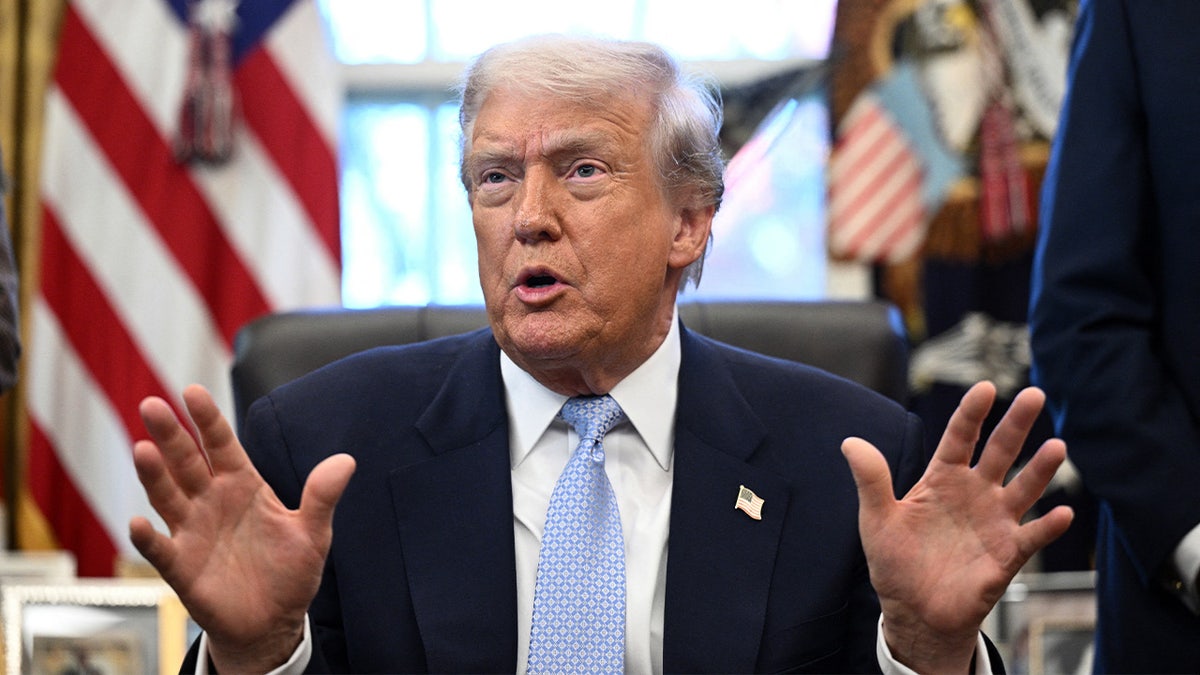
I hope President Trump shares the successes and failures he’s seen as a businessman — and the message that giving away everything for free is a recipe for disaster. (Brendan Smialowski/AFP/Getty Images)
Mamdani’s policies create dependence on government systems — think government housing guarantees, government grocery stores, government transit, government price controls. And soon, the government will be telling you when you’re earning too much.
One system creates producers. The other creates recipients.
Trump’s line here should be simple: “Someone has to create the wealth before you can redistribute it. Eventually you’ll run out of creators.”
Conclusion: Trump Can Alter Mamdani’s View in One Meeting
When Trump sits down with Mamdani, I hope he doesn’t lecture him. I hope he teaches him — with examples of what’s worked in this country for nearly 250 years. I hope he shares the successes and failures he’s seen as a businessman — and that giving away everything for free is a recipe for disaster.
Taking money from people who’ve earned it and giving it to otherssounds good on the surface until you realize that most of those earning it are the ones creating jobs for those who don’t have it. Or he could simply pull out a map of the world and ask Mamdani which country is doing socialism the right way — and where it’s working.
Capitalism: Build more → Attract more → Innovate more → Earn more → Employ more.
Socialism: Regulate more → Tax more → Control more → Ration more → Depend more.
One system creates abundance. One system manages scarcity. And that’s the difference all Americans need to remember.
Leave a Reply