Spring training is almost here, but the anxiety around the San Diego Padres isn’t easing.
To many fans, the quiet offseason feels like neglect.
No headline signings. No last-minute splashes. No bold declarations. Instead, there’s a growing sense that something deeper is limiting the franchise—and that something isn’t baseball strategy.
It’s math.
The Padres enter 2026 with a luxury tax payroll just under $260 million, placing them among the most financially committed teams in the sport.
Nine players alone account for more than $182 million of that figure. Five of them will earn over $20 million this season.
This isn’t a roster problem that can be patched with creativity. It’s a structure that was locked in years ago.
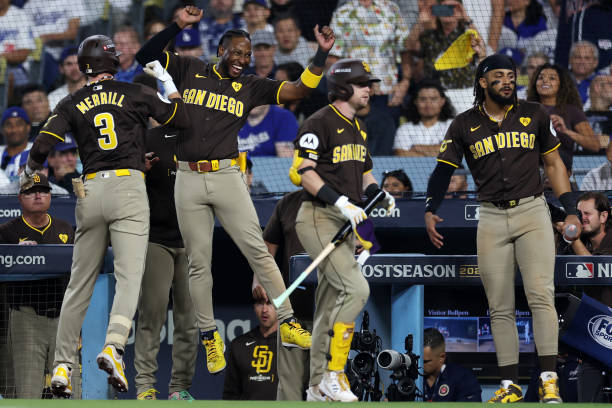
Manny Machado. Xander Bogaerts. Fernando Tatis Jr. Jackson Merrill.

These aren’t short-term bets. Four of those contracts run through 2032, anchoring the franchise to a core that ownership clearly believes in—but that also limits flexibility at the margins.
That context explains why A.J. Preller’s winter looked unusually restrained.
The Padres aren’t unwilling to spend. They already did. Last season’s payroll surpassed $270 million, triggering nearly $7 million in luxury tax penalties.

Doing that again—while the franchise is being prepared for sale—was never realistic.
That’s the part fans often miss.
The Seidler family has reiterated its commitment to fielding a competitive team in 2026. But “competitive” doesn’t mean reckless. Not when every added dollar affects valuation.

Not when potential buyers are watching.
So instead of swinging big, Preller pivoted quietly. Low-risk depth moves. Strategic restraint. No contracts that complicate the books beyond what’s already there.
That doesn’t mean the Padres are stuck forever.
The payroll picture begins to loosen after 2026. Projections show a drop to $221 million in 2027, then down to $197 million in 2028, before falling sharply below $135 million by 2029.

That’s real breathing room—if the organization can hold steady until then.
There are off-ramps baked into the plan.
Ramon Laureano comes off the books. The club holds an option on Kyle Hart. Roughly $40 million in commitments may disappear after 2026, giving Preller room to maneuver again.
Michael King’s situation looms large. He holds a player option for 2027 and 2028, but walking away would mean leaving $58 million on the table.

Health concerns and timing will dictate that decision, but the Padres clearly see him as central to their next phase. An extension post-sale wouldn’t surprise anyone inside the organization.
Joe Musgrove represents another pivot point. Eligible for free agency after 2027, his performance over the next two seasons will determine whether San Diego reinvests—or reallocates that $20 million toward a different need.
The irony is that Preller hasn’t changed.
This is still the executive who dealt elite prospects for Mason Miller. Still the GM who weaponizes the trade deadline. Still aggressive when the moment allows it.
The difference now is timing.
The Padres can’t afford to chase short-term fixes that complicate long-term stability—not with ownership in flux and payroll already near its ceiling.
Any major in-season move in 2026 will require near-perfect alignment of opportunity, cost, and leverage.
That’s uncomfortable for fans. Patience always is.
But the silence this winter isn’t confusion. It’s calculation.
The Padres aren’t drifting. They’re waiting—for contracts to expire, for clarity on ownership, for a moment when flexibility finally returns.
Until then, the roster you see is the roster they’re committed to defending.
And whether that patience pays off—or costs them ground in a crowded NL—will define the next chapter of San Diego baseball.
Leave a Reply