The White Sox have no shortage of questions heading into 2026.
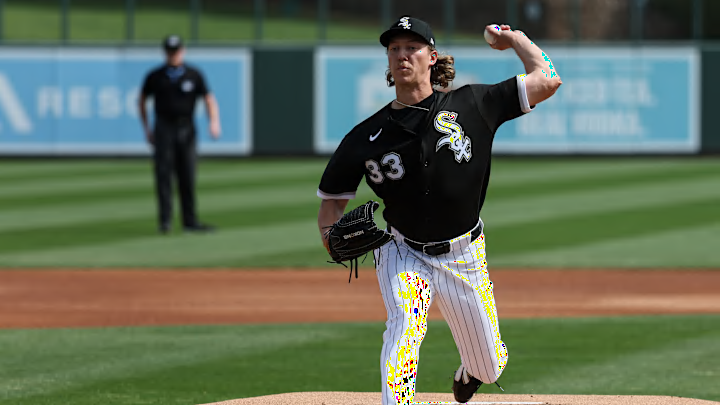
Colorado Rockies v. Chicago White Sox | Rob Leiter/GettyImages
Will Colson Montgomery and Kyle Teel build on the promise they showed in 2025?
Will Munetaka Murakami’s power survive big-league pitching?
Will Anthony Kay’s overseas success translate back to Chicago?
Will any of the young arms who flashed last season actually take the leap?
All of those matter.
But none of them will define the season the way this one question will:
Can Hagen Smith and Noah Schultz rebound?
This isn’t just another development storyline. It’s the axis on which the entire rebuild quietly turns. The White Sox are finally beginning to feel stable on the position-player side. The lineup has shape. The core is forming. There’s momentum.
The pitching, however, still feels unresolved.

Chicago has intriguing arms throughout the system, but very few project as true frontline starters. Tanner McDougal. Christian Oppor.
Useful names. Interesting ceilings. But they don’t carry the same weight—or expectation—as Smith and Schultz.
Those two were supposed to be different.
They were the blue-chip answers. The pitchers who would make everything else easier. The ones who would prevent Chicago from having to spend money it historically avoids spending, or trade prospects it can’t afford to lose.
And then 2025 happened.

Neither Smith nor Schultz collapsed outright, but both fell short in ways that made people uncomfortable. Not alarmed—but watchful.
Smith’s issues were largely mechanical. His stuff didn’t disappear, but his command did. Walks piled up. Counts ran deep.
Efficiency vanished. The White Sox responded by working to simplify his delivery, stripping away excess movement in hopes of restoring rhythm and repeatability.
Schultz’s struggles were quieter—and possibly more concerning. A lingering knee injury sapped some of the sharpness from his arsenal and coincided with a rise in his walk rate.
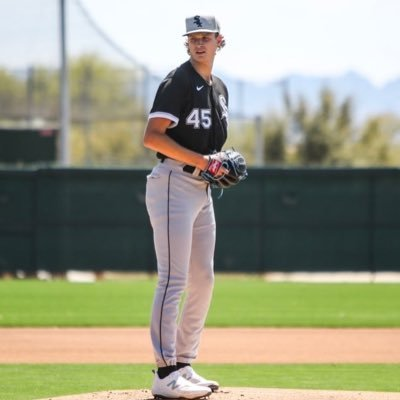
For him, 2025 became less about performance and more about survival. The priority shifted from development to recovery.
Neither situation demands panic.
Both demand results.
The White Sox remain publicly confident in both pitchers. Internally, the belief is that Smith’s fixes are tangible and Schultz’s health will unlock what went missing. Each enters 2026 with a realistic path to the major leagues this season.
That’s the optimism.
The pressure comes from what happens if it doesn’t materialize.
If Smith and Schultz stumble again—if the command doesn’t return, if the stuff doesn’t rebound—the consequences stretch far beyond one season.
It would force the White Sox into decisions they’ve spent years trying to avoid.
This organization has never shown a willingness to spend heavily on starting pitching. Dallas Keuchel’s three-year, $55 million deal remains the largest contract they’ve ever given to a starter.
The idea of committing nine figures to a frontline arm—possibly while sacrificing draft compensation—runs counter to everything they’ve done historically.
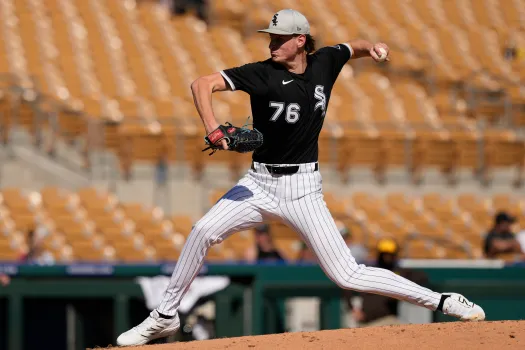
The trade market isn’t a clean solution either. Acquiring an ace costs premium prospects, and a rebuild built on internal development can’t survive too many shortcuts.
That’s why Smith and Schultz matter so much.
They represent the simplest solution—and the most fragile one.
If even one of them emerges as a legitimate top-of-the-rotation option, the rebuild accelerates. The roster balances. The pressure eases. If both do? The White Sox suddenly look ahead of schedule.
If neither does?
Then 2026 won’t feel like progress. It will feel like limbo.
With spring training less than two weeks away, the talking points are almost exhausted. Development plans have been drawn. Adjustments have been made. Rehab timelines have been respected.
Now comes the part no one can spin.
The pitches have to land.
The health has to hold.
The talent has to show up when it matters.
The White Sox don’t need perfection from Hagen Smith and Noah Schultz.
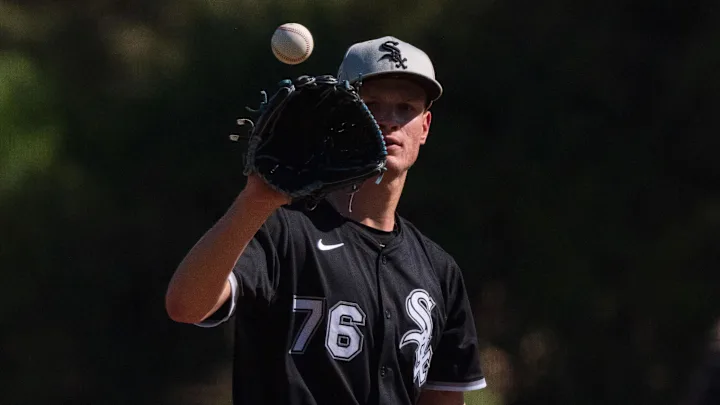
They need proof.
Because when the season ends, the most important question won’t be how far the lineup came—
It will be whether the arms the rebuild was built around finally showed why everything else has been waiting on them.
Leave a Reply