Trey Yesavage isn’t entering spring training like a typical rookie.
He’s entering it with miles on his arm.
After a whirlwind 2025 season that took him from college baseball to the World Series stage, the Toronto Blue Jays’ top pitching prospect reported to camp carrying something few first-year starters do: a nearly 50 percent jump in workload in just one calendar year.

The raw number tells the story immediately. Yesavage threw 93.1 innings at East Carolina in 2024. In 2025, that figure ballooned to 139.2 innings, spread across four minor league levels, the majors, and an extended postseason run. For a pitcher still adjusting to professional routines, travel, and recovery demands, that’s not just a jump—it’s a stress test.
And it happened fast.

Yesavage climbed through Single-A, High-A, Double-A, and Triple-A before debuting with Toronto in mid-September. Across the minors, he looked every bit like an ace in the making: a 3.12 ERA, 0.97 WHIP, and 160 strikeouts in 98 innings. When he reached the big leagues, the moment didn’t overwhelm him. In three MLB starts, he posted a 3.21 ERA and held his own against veteran lineups.
Then came October.

The postseason pushed Yesavage into unfamiliar territory. He logged 27.2 innings in playoff action, including a jaw-dropping 12-strikeout performance against the Dodgers in the World Series. For Toronto fans, it was intoxicating. For player development staff, it was a delicate balancing act.
Yesavage admitted afterward that the offseason arrived faster than his body expected.

“I had the most workload this year and it’s the shortest offseason I’ve ever had,” he said while visiting Toronto. He took roughly three weeks off from throwing—brief by typical standards—before beginning his ramp-up toward spring training.
That’s where the tension lies.

Workload jumps aren’t automatically dangerous, but history shows they demand caution. Pitchers often don’t feel the effects immediately. Fatigue, mechanical drift, or injury risk tends to surface months later, sometimes quietly, sometimes catastrophically. Toronto’s decision not to place strict limits on Yesavage in 2025 paid off competitively—but now the bill comes due in terms of monitoring and restraint.
To his credit, Yesavage appears self-aware. He’s entering camp focused not just on endurance, but refinement. One area of experimentation is a curveball, a pitch he used in college but largely shelved last season in favor of his fastball, splitter, and slider. With most of his arsenal moving arm-side, he’s searching for something that breaks glove-side to keep hitters honest.
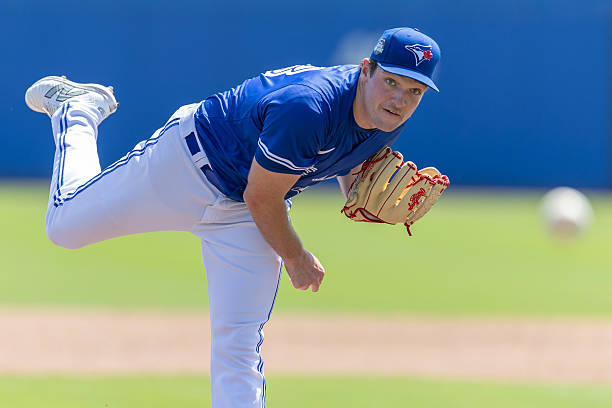
That search isn’t trivial. Yesavage’s release point—over seven feet high—creates elite deception but also complicates pitch design. Few pitchers share that combination of height, arm angle, and movement profile. Every tweak carries ripple effects.
The Blue Jays, meanwhile, face a strategic choice.
Yesavage has already proven he can survive big moments. The temptation to ride that momentum is real. But the smarter long-term play may involve selective usage, skipped starts, or even bullpen flexibility early in 2026—options manager John Schneider has already floated.
Toronto’s window is opening. Their 2025 run reignited belief. Yesavage could be a pillar of the next era, not just a spark. Protecting him now may feel conservative, but losing him later would be devastating.
Spring training will offer clues. How sharp does his stuff look? How does his recovery respond to game intensity? Does the added curveball ease the burden on his primary pitches?
For Yesavage, the challenge isn’t proving he belongs. He’s already done that.
The challenge now is surviving success—when expectations rise faster than the body can adapt.
Leave a Reply