At first glance, the Toronto Blue Jays’ offseason strategy raised eyebrows.
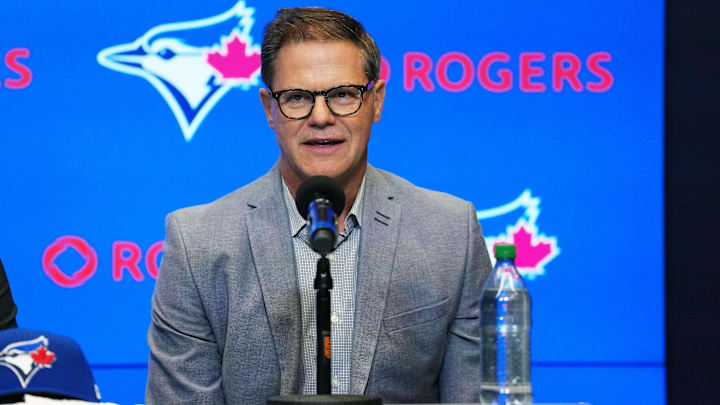
Toronto Blue Jays general manager Ross Atkins | Nick Turchiaro-Imagn Images
Why invest so heavily in starting pitching when the rotation already looked strong? Why keep adding arms to a group that, on paper, didn’t appear to need much help?
Now, just days before Opening Day, the answer is becoming clear.
Ross Atkins wasn’t just building a rotation—he was preparing for what could go wrong.
And it already has.
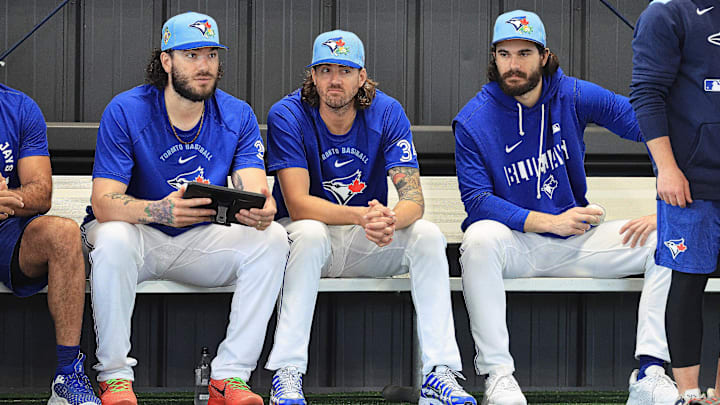
Toronto Blue Jays pitchers Cody Ponce (left), Kevin Gausman (center) and Dylan Cease (right) | Kim Klement Neitzel-Imagn Images
The Blue Jays have been hit with a wave of pitching setbacks before the season has even begun. What once looked like excess depth is quickly being tested, and the front office’s aggressive approach is starting to look less like a luxury and more like a necessity.
It started with Bowden Francis, a depth piece who would have provided valuable insurance, going down with a UCL injury that will sideline him for the entire season.
Then came another setback.

Shane Bieber, one of the more intriguing additions to the staff, will begin the year on the injured list due to forearm inflammation. For a pitcher still working his way back from Tommy John surgery, it’s a concerning development.
And the hits didn’t stop there.
José Berríos, long considered one of the most durable starters in baseball, was diagnosed with a stress fracture in his arm—an unexpected blow that removes another key piece from the early-season equation.

Top prospect Trey Yesavage has also been slowed by shoulder issues, while Ricky Tiedemann continues to deal with elbow soreness. Suddenly, a large portion of Toronto’s pitching depth is either unavailable or limited.
In another year, that might have spelled trouble.
This year, it doesn’t have to.
Because even with multiple arms sidelined, the Blue Jays can still roll out a rotation featuring Kevin Gausman, Dylan Cease, Max Scherzer, Cody Ponce, and Eric Lauer. It’s not just serviceable—it’s competitive.
That’s the payoff of Atkins’ approach.

He didn’t assume everything would go right. He planned for the opposite.
The risks were always there.
Bieber’s recent injury history made him a question mark. Yesavage was expected to be handled carefully as a young arm. Tiedemann was coming off surgery. And several members of the rotation are veteran pitchers with heavy workloads behind them.
Individually, each case might have seemed manageable.
Together, they create exactly the kind of scenario Toronto is now facing.
But instead of scrambling, the Blue Jays are absorbing the impact.
That’s the difference.

Depth isn’t just about having extra players—it’s about maintaining stability when things inevitably go wrong. And in a 162-game season, they almost always do.
There’s also a bigger picture at play.
Toronto isn’t building for April. They’re building for October.
Having the flexibility to manage workloads, ease pitchers back from injury, and avoid rushing young arms could prove invaluable later in the season. It allows the team to think long-term, rather than reacting out of necessity.
And that’s what Atkins’ moves were really about.
He may not have said it outright, but the message is clear now: this team was built to withstand adversity.
Because in baseball, it’s not a matter of if things go wrong.
It’s whether you’re ready when they do.
Leave a Reply