
As the Houston Astros prepare for the 2026 season, expectations remain high—but so does the pressure.
And in a twist that has caught many off guard, manager Joe Espada is already being mentioned as one of the names to watch if things go sideways early.
Espada is entering just his third season at the helm, yet the margin for error in Houston appears to be shrinking.
After years of dominance, anything short of a postseason return now feels like a step backward for a franchise used to October baseball.
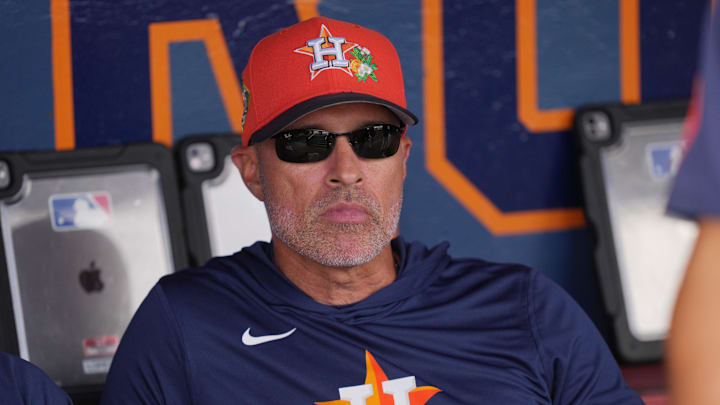
Joe Espada | Jim Rassol-Imagn Images
His tenure began with promise. In his first season, Espada guided the Astros into the playoffs, though their run ended abruptly with a sweep at the hands of the Detroit Tigers in the American League Wild Card round. It wasn’t the finish Houston hoped for, but it was still a postseason appearance.
Last year told a different story. The Astros remained in contention deep into the season, but injuries took their toll.

A late fade cost them the division title, as the Seattle Mariners surged past them to claim the American League West. Missing the playoffs entirely marked a rare stumble for the organization.
The offseason did little to dramatically reshape the roster. The most notable departure was Framber Valdez, who left in free agency—ironically landing with the same Tigers team that ended Houston’s 2024 postseason.

To fill the gap, the Astros added Tatsuya Imai, who is expected to slot near the top of the rotation behind Hunter Brown.
Still, the lack of major reinforcements has raised questions. For a team with championship aspirations, standing relatively still in the offseason can be risky—especially with an aging core and increasing competition within the division.
That context helps explain why CBS Sports’ Dayn Perry included Espada on his list of managers entering 2026 on the hot seat. It’s a surprising inclusion, particularly given how he managed through adversity just a year ago.

Perry acknowledged as much, noting that Espada handled a flawed, injury-riddled roster well in 2025. But in today’s MLB environment, recent results often outweigh context. A missed postseason and a quick playoff exit can shift perception quickly—fairly or not.
There are also broader concerns surrounding the roster itself. Houston’s pitching depth remains uncertain, and the team will begin the season without closer Josh Hader.
Combine that with an older lineup and lingering durability questions, and the pressure naturally intensifies.
If accountability is to be assigned, many would argue it shouldn’t fall primarily on Espada. General manager Dana Brown could face scrutiny for roster construction, while ownership decisions—particularly inconsistent spending under Jim Crane—have also drawn quiet criticism.

Perry pointed directly to that dynamic, suggesting that while ownership plays a significant role in shaping outcomes, managers are often the ones who ultimately pay the price.
That reality is what makes Espada’s situation worth watching. Even if he hasn’t underperformed, the expectations in Houston leave little room for patience.
A slow start could quickly turn up the heat. But based on his track record and the circumstances he’s managed through, Espada likely deserves more runway than the early “hot seat” label suggests.
In a city accustomed to winning, perception can shift fast. For Joe Espada, 2026 may not just be about competing—it may be about proving he still belongs at the center of Houston’s future.
Leave a Reply